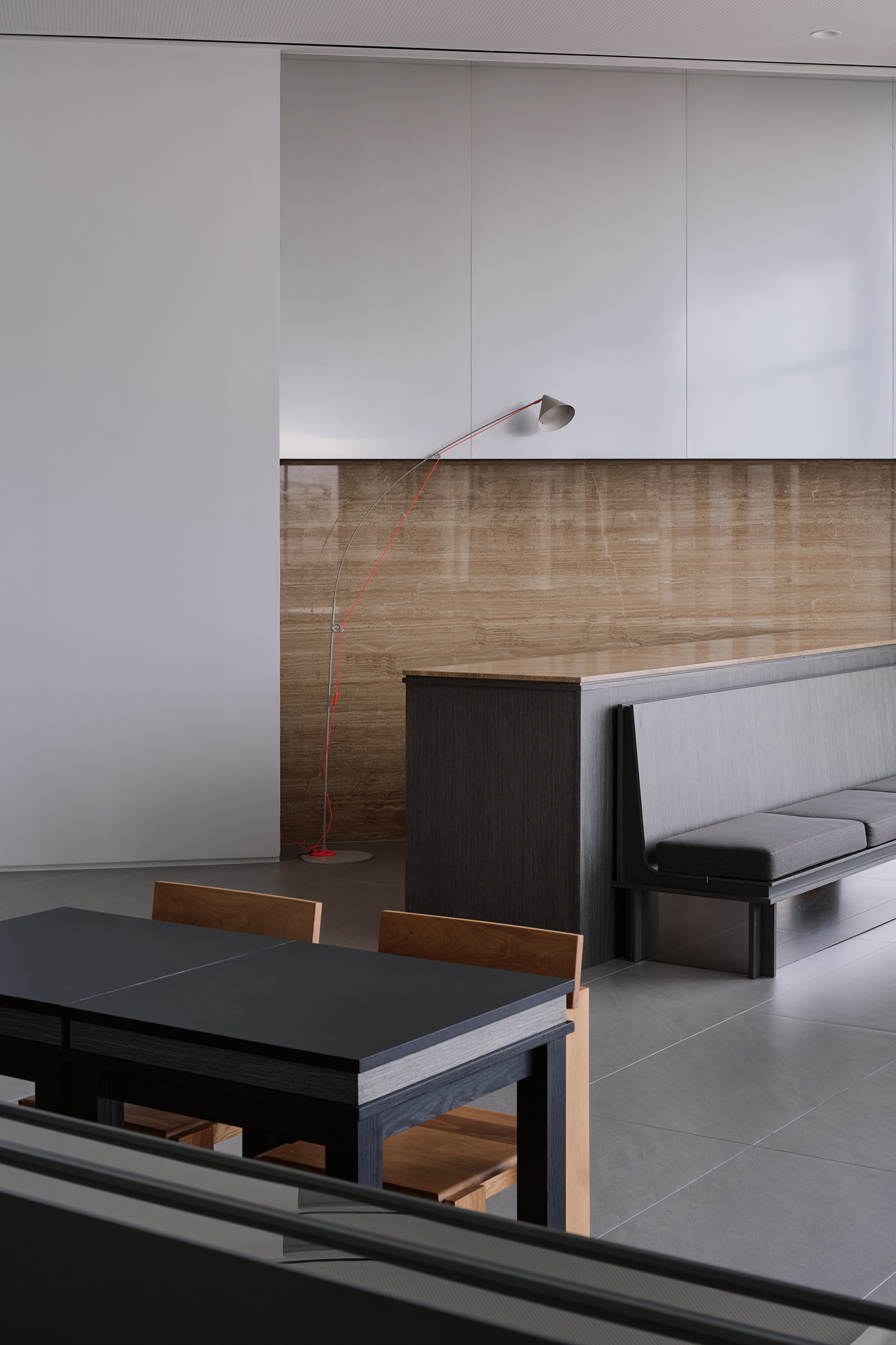

언캐니(UNCANNY)는 본래 ‘집처럼 편안한(Homely)’의 반대 개념이며, ‘익숙하지만 낯선(Unhomely)’ 감각에서 비롯된 표현이다. 이 모순된 감각은 불편함을 주기도 하지만, 동시에 새로운 시선을 열어주는 힘을 지닌다. 언캐니 로스터스는 바로 이 ‘익숙한 낯섦’에서 브랜드의 정체성을 발견한다.
“Uncanny” comes from the idea of being the opposite of feeling at home(homely). It’s something that feels familiar, but also strangely different. That weird mix can make you uncomfortable, but it also helps you see things in a new way. At Uncanny Roasters, we’ve built our brand around that feeling the strange, yet familiar.
고전 예술의 관념을 흔든 뒤샹의 샘, 성역을 유쾌하게 넘나드는 아티스트 집단 미스치프처럼, 언캐니는 단순한 부정을 넘어 고정된 흐름에 질문을 던지는 위트 있는 태도를 지향한다. ‘낯설지만 기분 좋은 반항’, 언캐니는 이러한 철학을 바탕으로, 기존 스페셜티 커피 브랜드의 틀을 벗어난 방식으로 ‘탁월한 커피’를 만든다. 그리고 그 첫 번째 공간을 김포 대곶면, 서해 바다 앞에 선보인다.
스토프(stof)는 실내 공간 기획과 디자인을 담당하며, 건축 단계부터 참여해 브랜드의 철학을 공간 언어로 구현하고자 했다. ‘낯설지만 기분 좋은 반항’이라는 키워드를 중점으로 기존 바다 앞 대형 카페의 클리셰를 되짚으며 언캐니만의 새로운 해석을 시도했다.
Like Duchamp’s Fountain, which challenged the idea of traditional art, or the playful boundary-pushing work of the artist collective MSCHF, Uncanny isn’t about rejecting things outright — it’s about asking clever questions that disrupt the norm. We call it a “pleasant kind of rebellion.” With that mindset, Uncanny Roasters creates great coffee in a way that breaks from the usual specialty coffee rules. Our very first space brings this spirit to life on the western coast of Korea, in Daegot-myeon, Gimpo.
Design studio stof led the spatial planning and interior design, joining the project from the architectural stage. Their goal was to translate the brand’s philosophy into a physical experience. Focusing on the idea of a “pleasant kind of rebellion,” they revisited the typical clichés of large seaside cafés and reimagined them through Uncanny’s unique perspective.


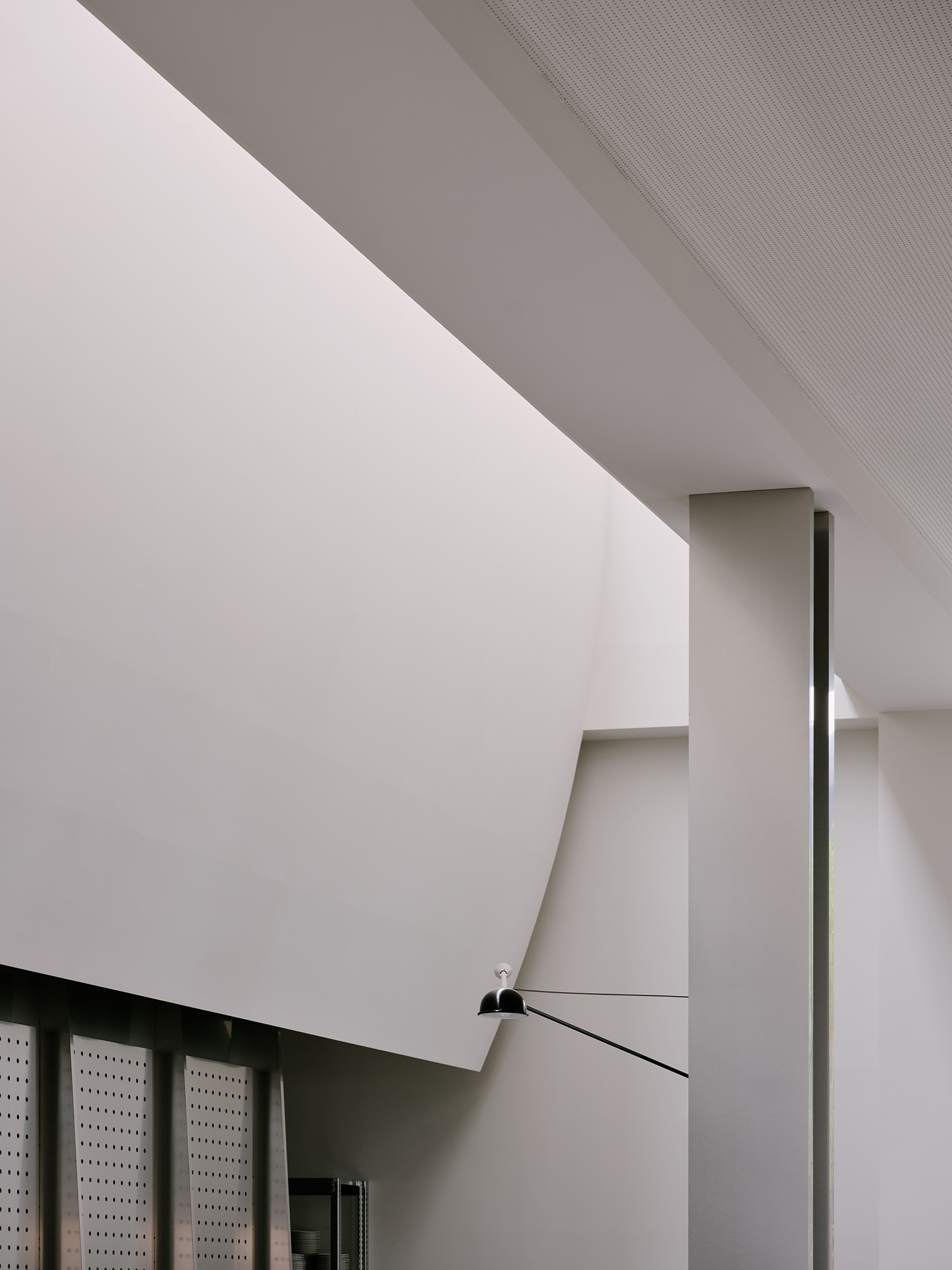


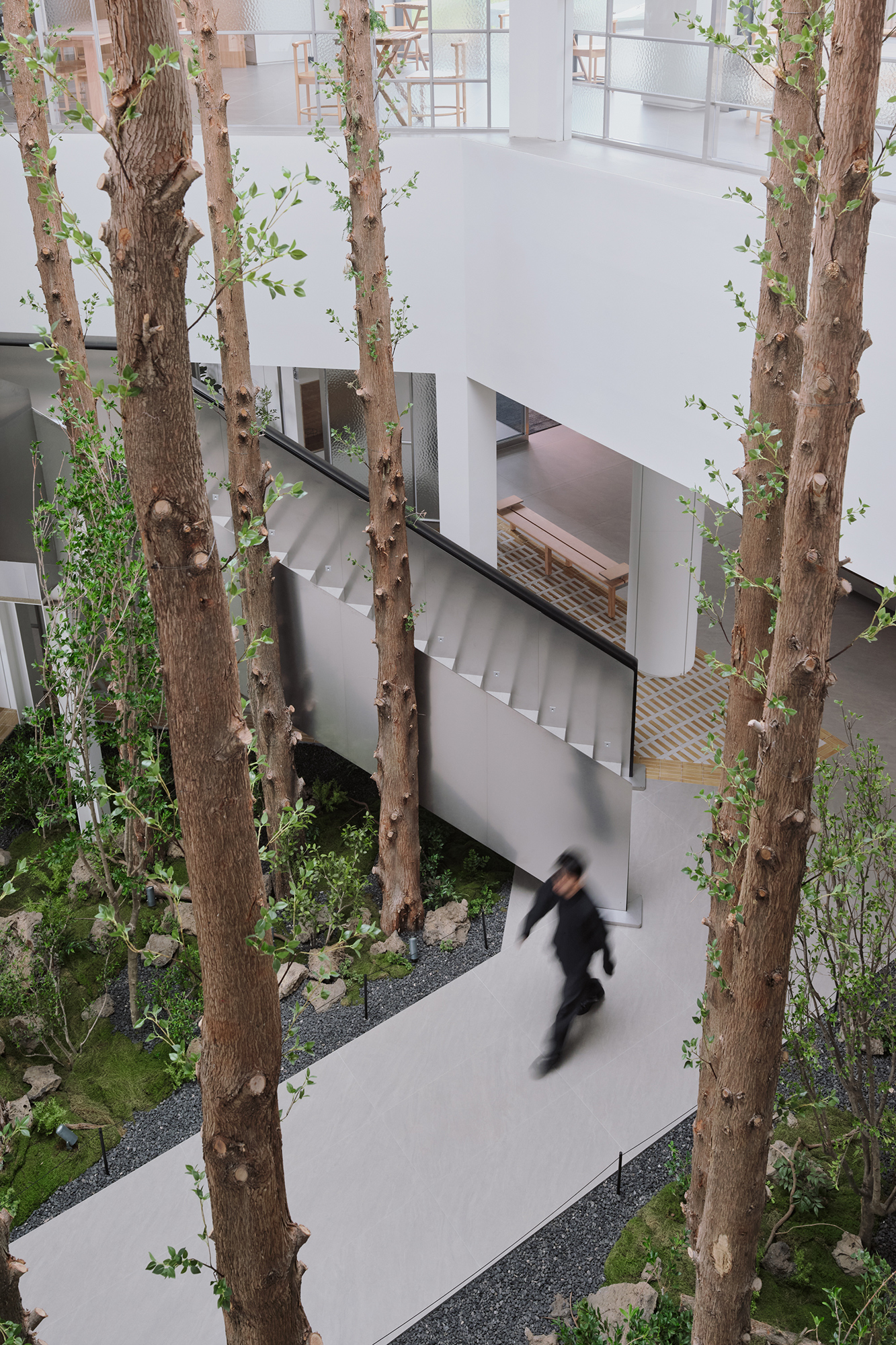
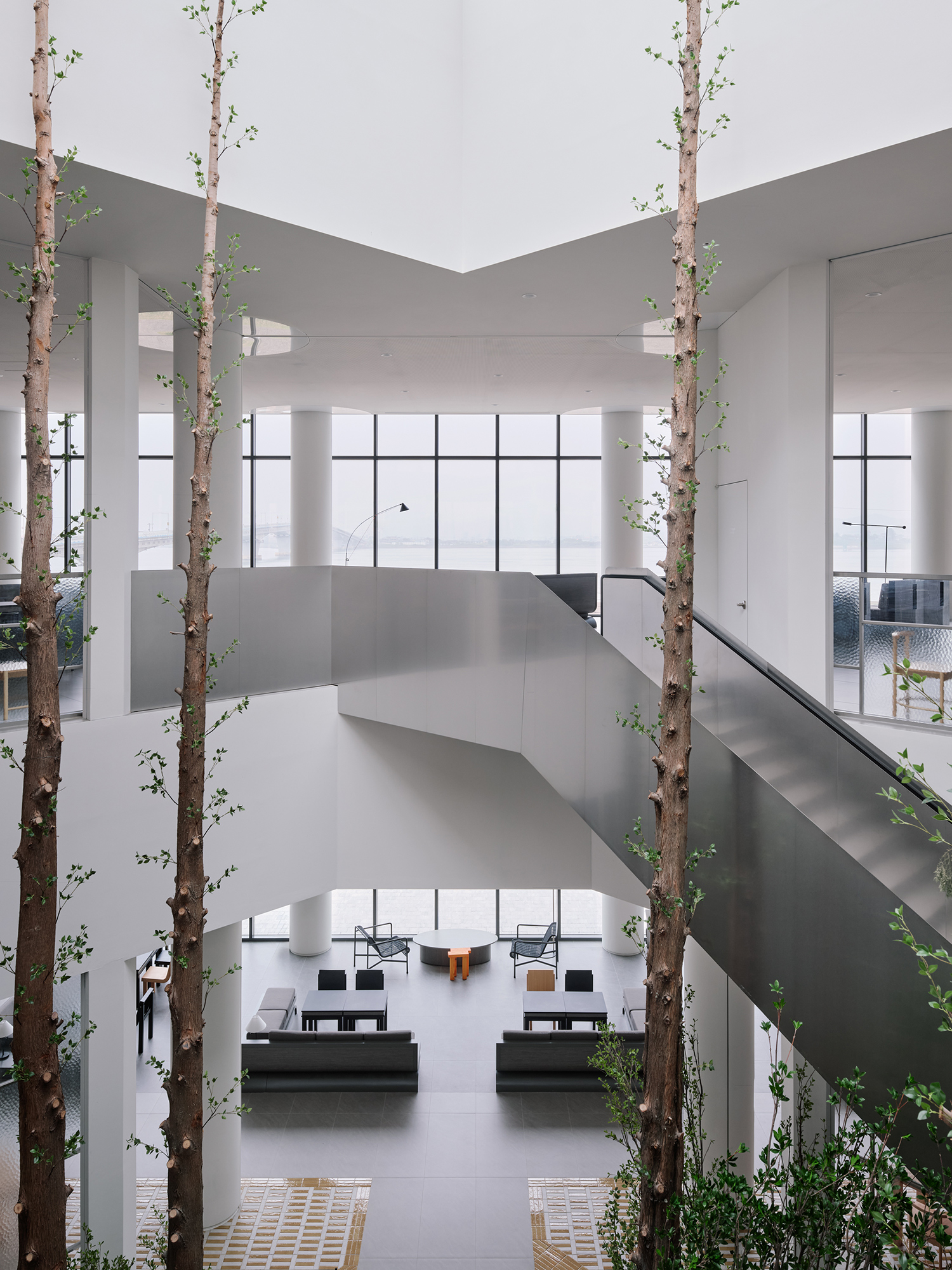
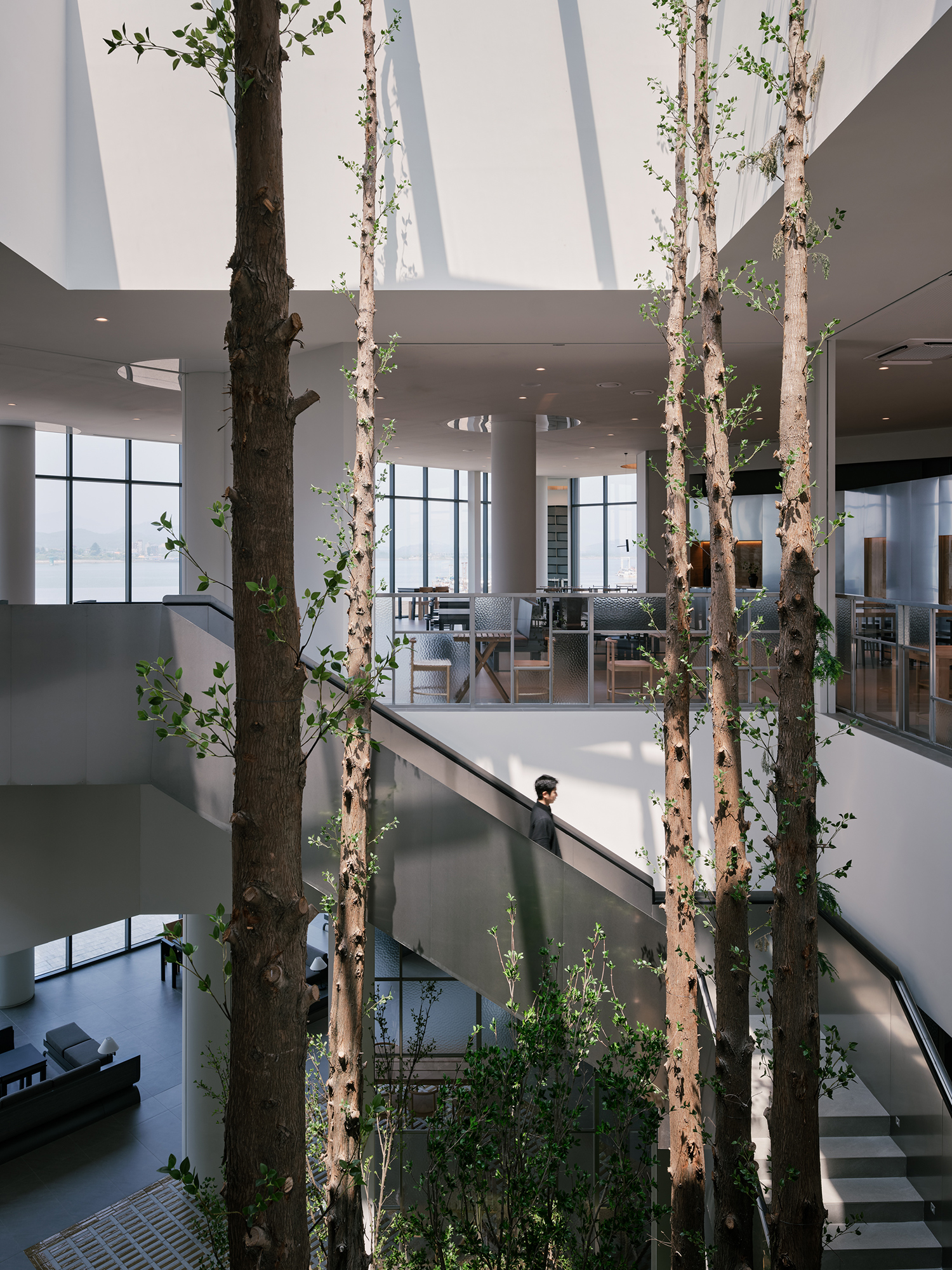
전체 공간은 언캐니라는 개념 자체를 컨셉으로 하여 구성되었다. 중앙에는 겉보기에 정직한 축 위에 배치된 안뜰이 자리하지만, 실제로는 그 축을 의도적으로 비틀어 미묘한 긴장감을 형성한다. 위쪽의 천창은 자연광을 들여보내며, 내부에 수직으로 자라는 숲을 완성시킨다. 이 중앙의 녹지는 몇몇 좌석만을 위한 요소가 아닌, 카페 전체와 존재감을 공유하며 브랜드 아이덴티티의 중요한 요소로 자리한다.
The entire space was designed around the idea of the uncanny. At the center, a courtyard sits on a seemingly regular axis—but that axis is intentionally twisted to create a subtle sense of tension. A skylight above brings in natural light, allowing a vertical forest to grow within. Rather than serving just a few seats, this central green space shares its presence equally with the whole café, becoming a key part of the brand’s identity.
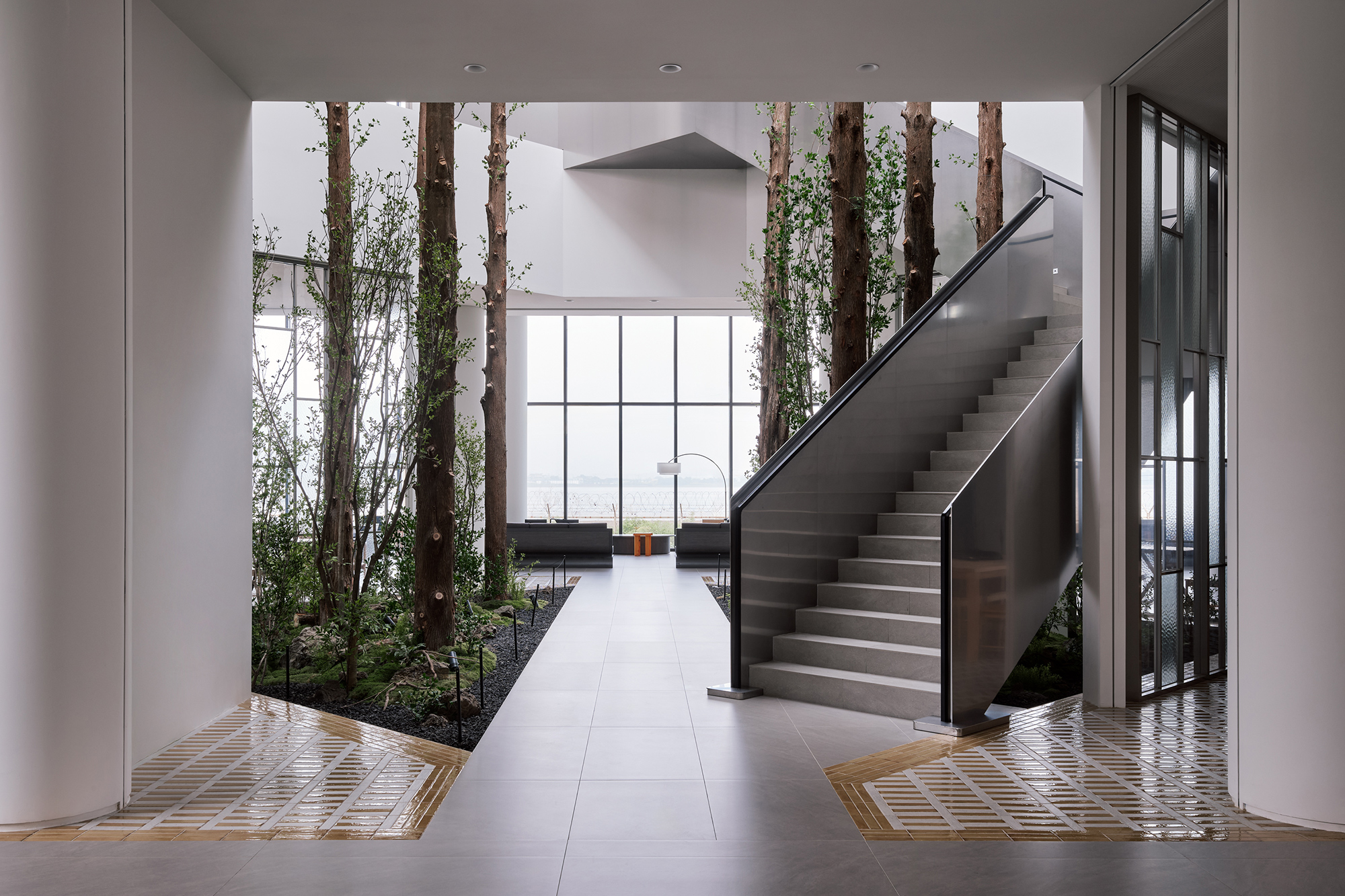
13미터 높이의 나무들로 둘러싸인 중정을 지나면 그 끝에서 바다를 마주한 공간을 만나게 된다. 이 또한 낯선 전개일 수 있지만 경험의 풍부함과 깊이감을 공간 안쪽 깊숙이까지 확장하여 들여오는 장치이다.
Passing through a courtyard enclosed by 13-meter-tall trees, the sequence culminates in a space facing the sea. This seemingly unexpected progression is designed to draw the richness and spatial depth further into the interior.

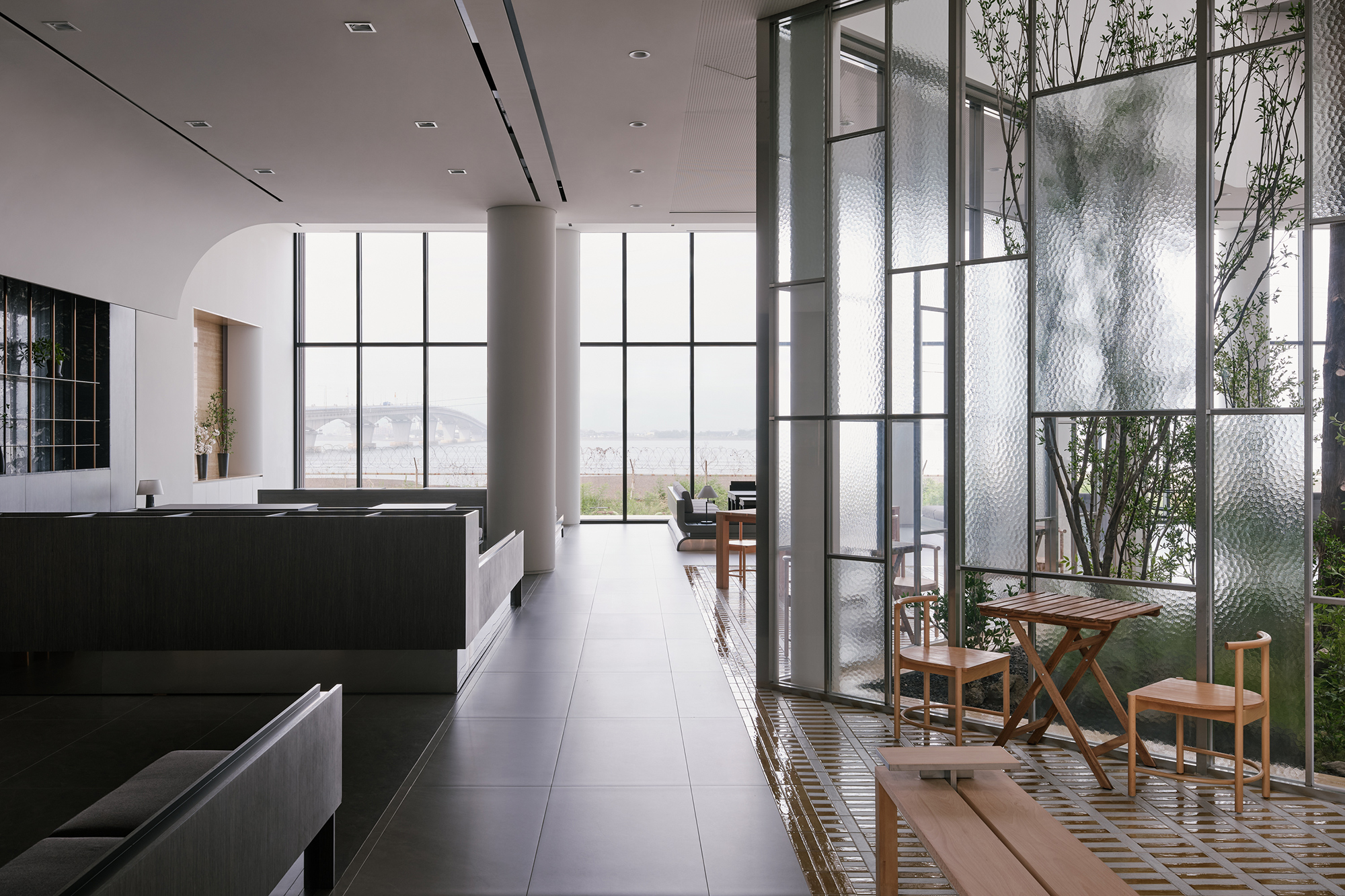
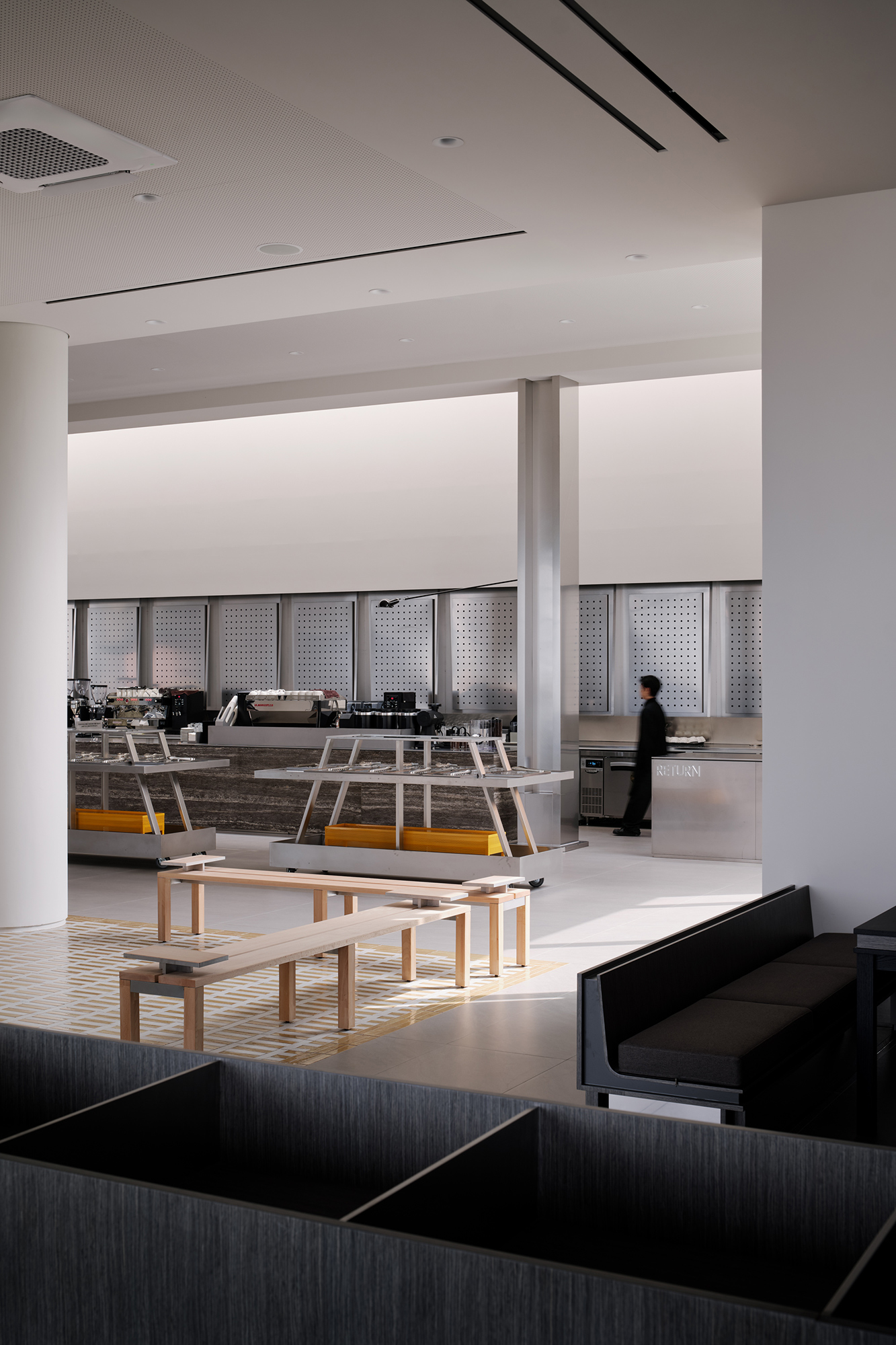
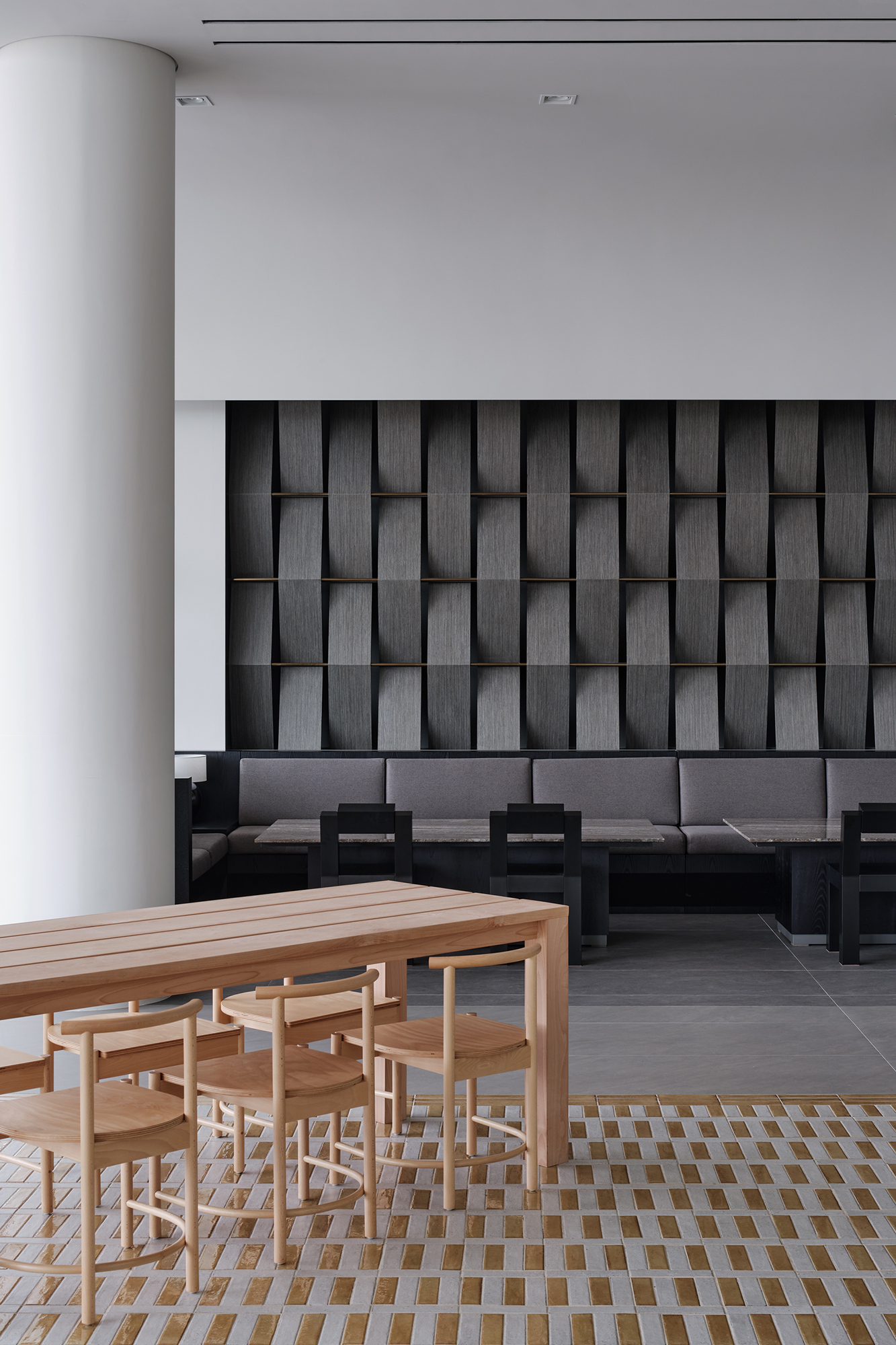
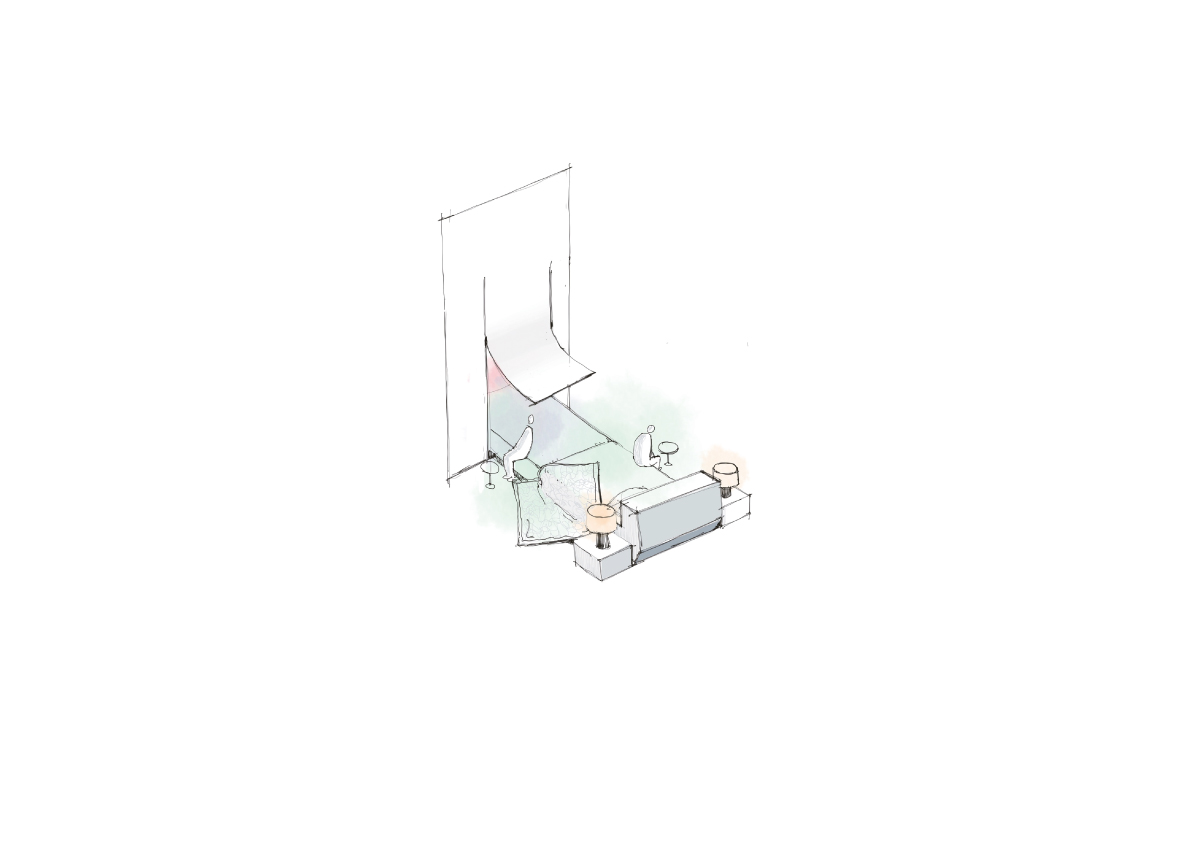
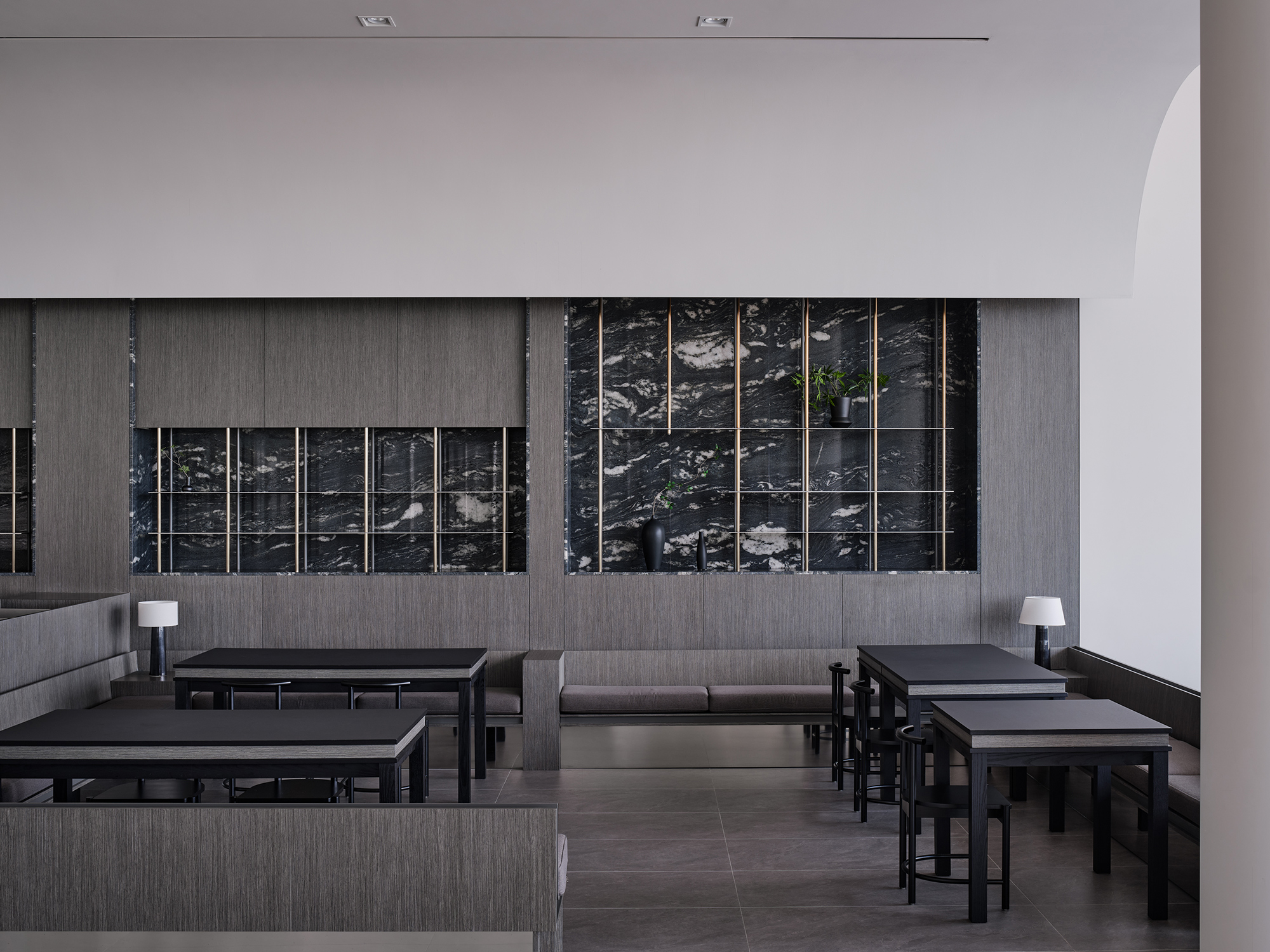
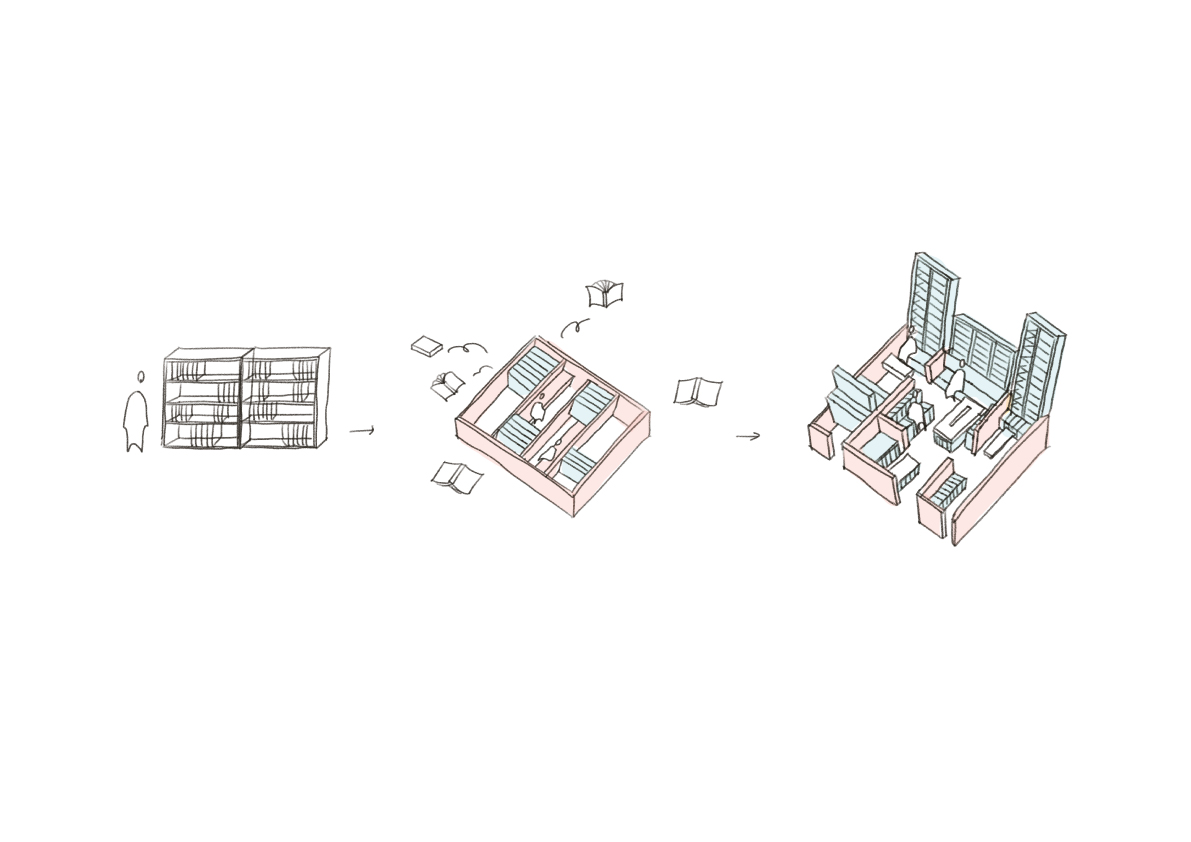
활발한 움직임이 이루어지는 1층의 바 공간은 작업실에서 착안해, 구조가 드러나는 조형과 러프한 질감의 스틸 소재를 적용했다. 천창을 통해 들어오는 자연광은 시간에 따라 공간의 분위기를 미묘하게 변화시킨다. 이어서 벽과 천장이 말려 올라가며 드러나는 좌석 공간은 각각 서재, 침실, 거실에서 차용된 고유의 캐릭터를 지닌다. 서재는 책장과 책의 선적인 요소, 침실은 푹신한 침구의 매스감과 패브릭의 엮임, 거실은 소파의 좌판과 팔걸이의 높낮이에서 오는 차이를 활용하여 각 좌석에 고유한 캐릭터를 부여했다. 서로 다른 조형 언어를 지니면서도, 전체는 무채색의 무늬목과 석재, 도장을 이용하여 통일성을 갖추었다.
The ground floor bar, where most of the movement happens, was inspired by the openness and practicality of a workshop. Exposed structures and raw steel textures give the space a functional, honest feel. Natural light from the skylight shifts throughout the day, subtly changing the mood. Around it, seating areas are revealed where walls and ceilings curl upward—each with a unique character drawn from familiar domestic spaces: a study, a bedroom, and a living room. The study uses vertical lines like bookshelves, the bedroom features soft, layered fabrics, and the living room plays with different seat depths and armrest heights. While each zone speaks a different design language, they’re tied together with a muted palette of wood veneer, stone, and painted surfaces.
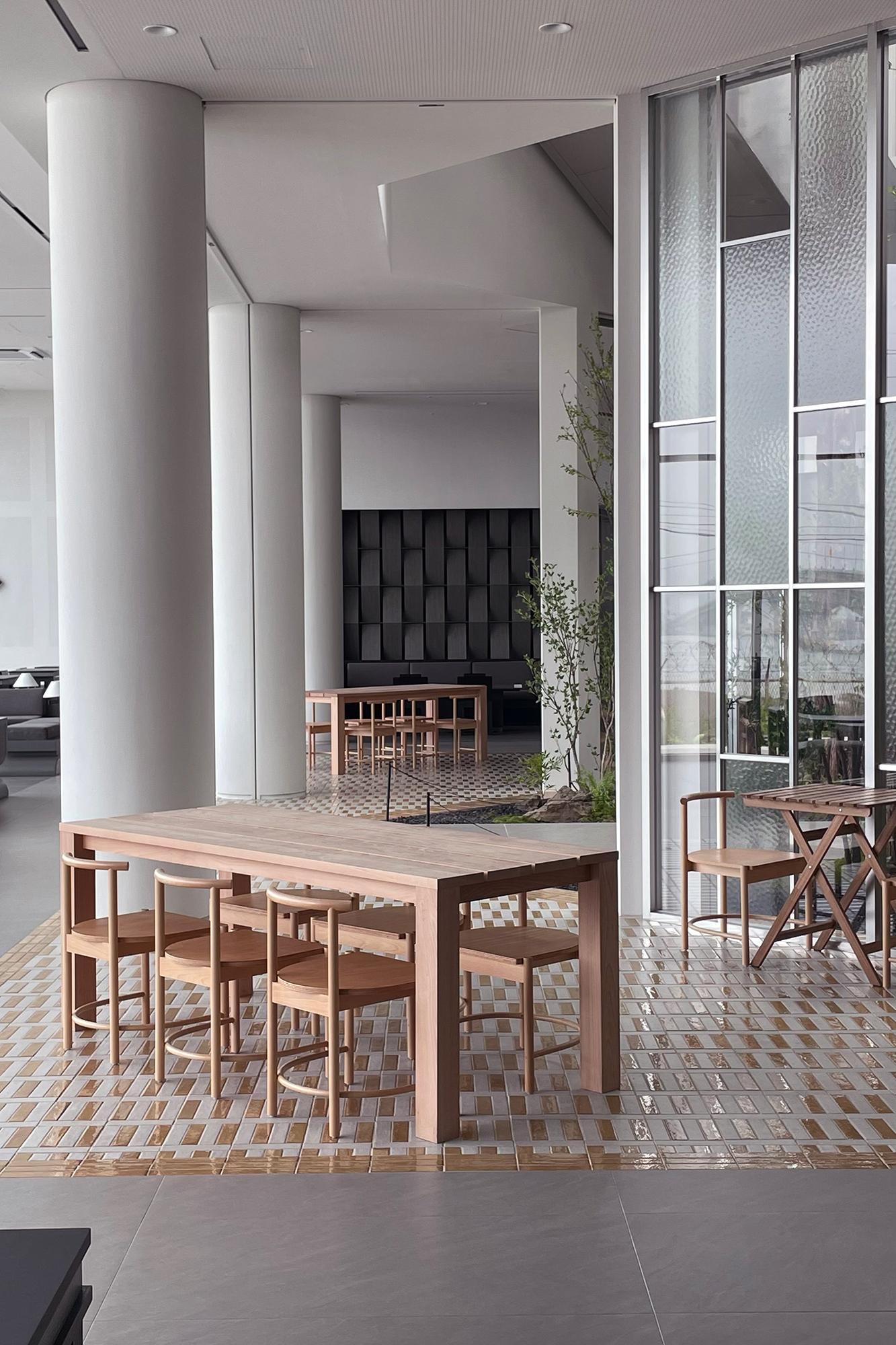

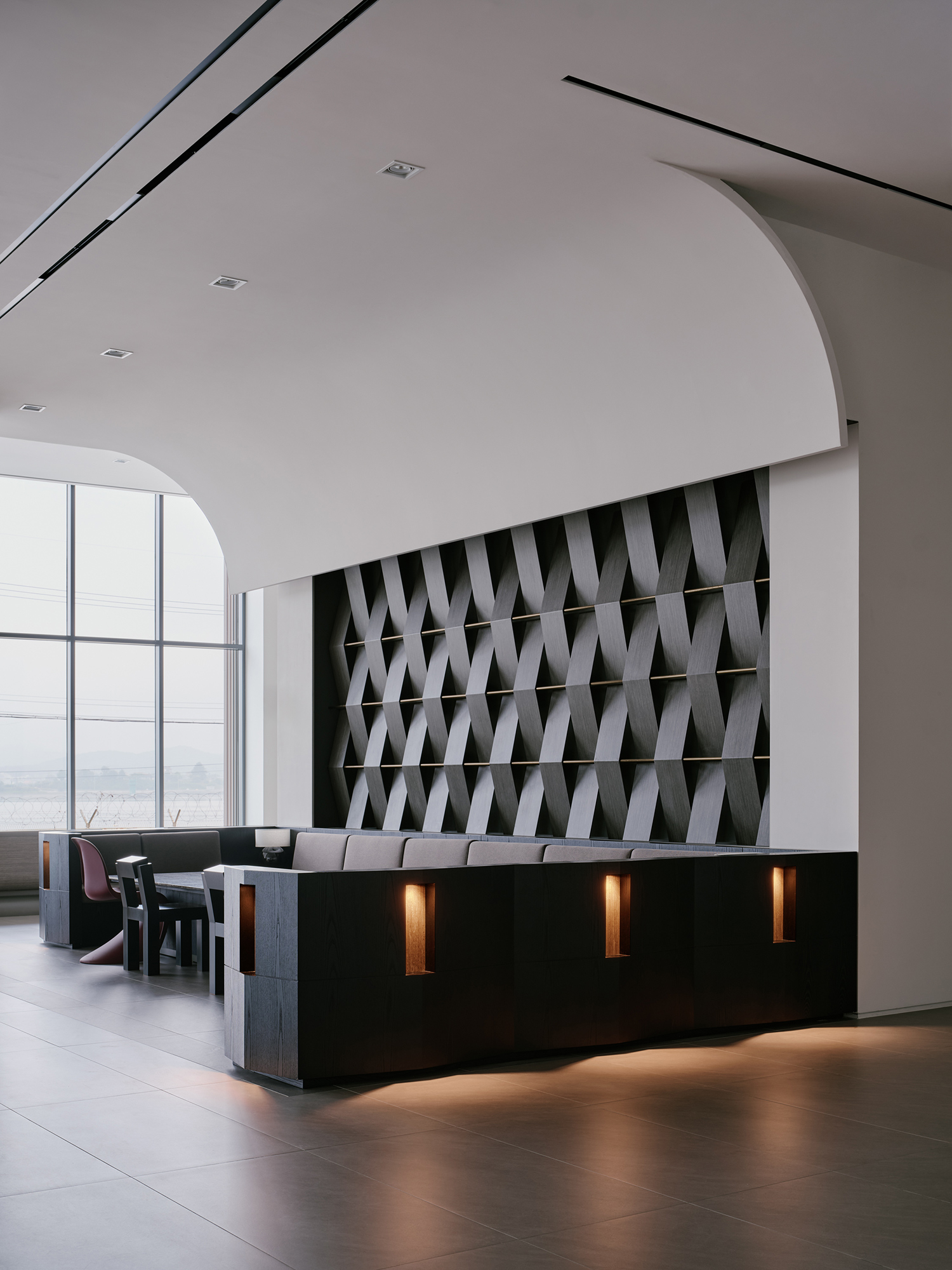

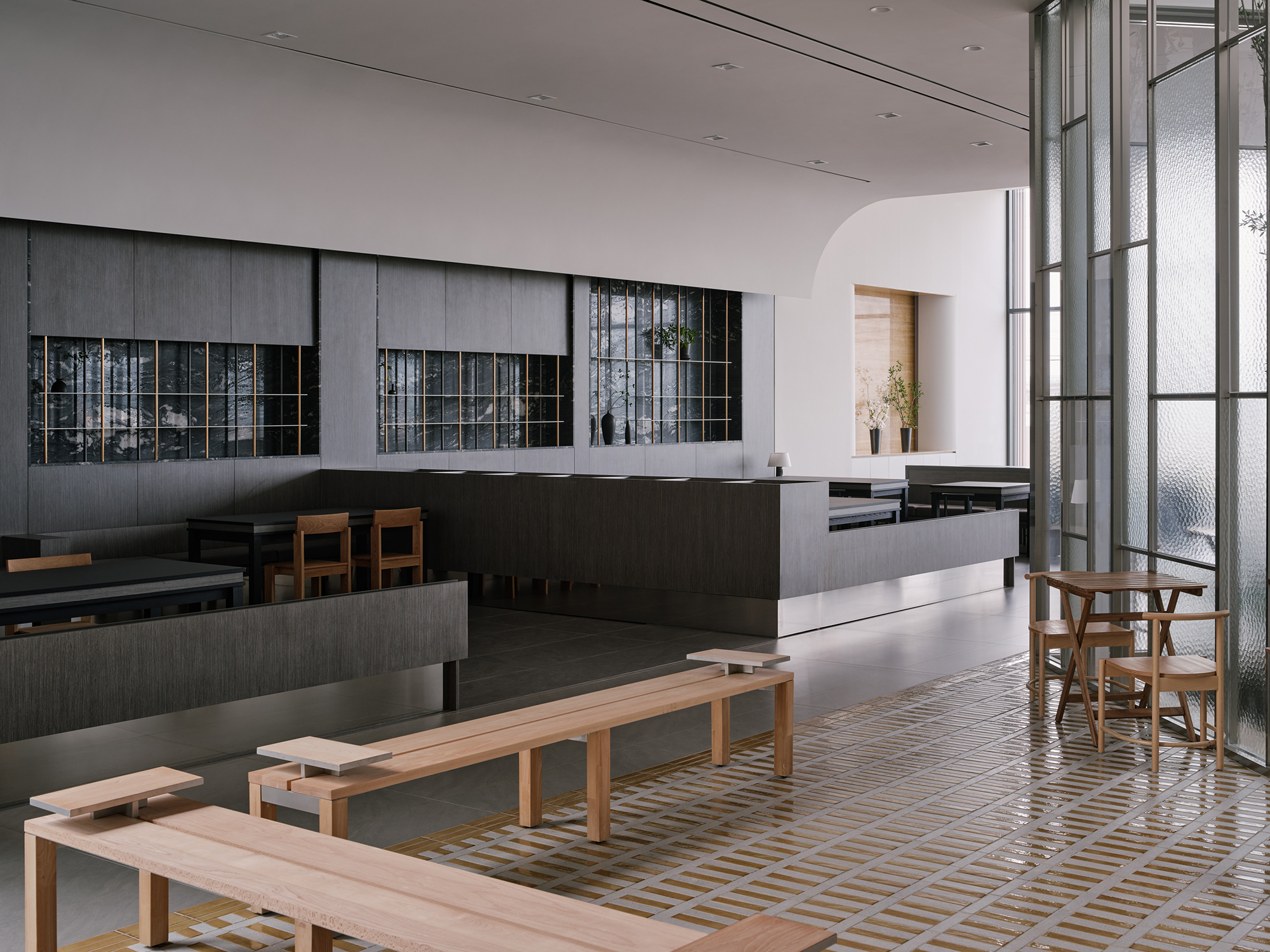



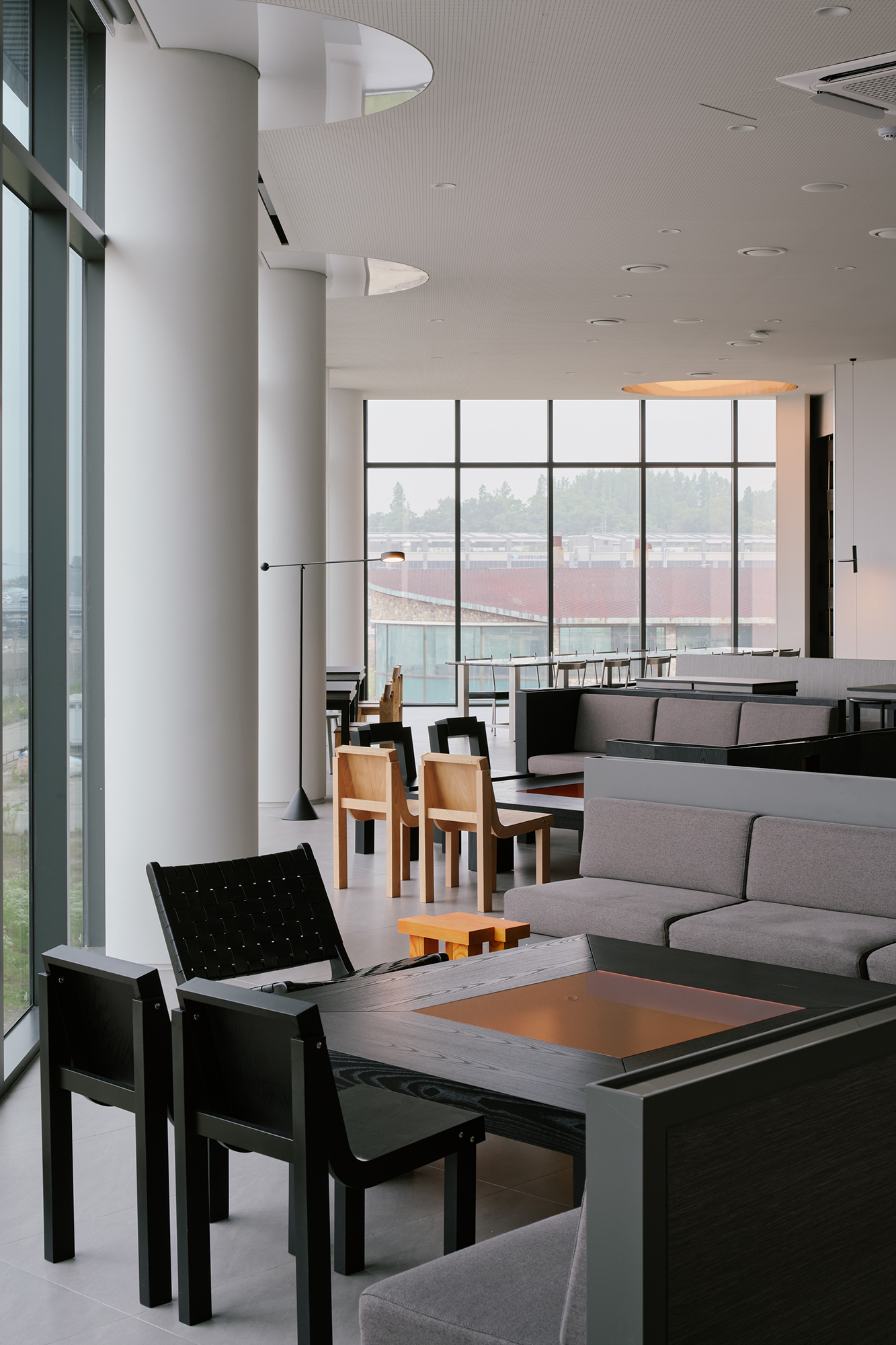
중정을 따라 2층으로 오르면, 1층에서 구분된 좌석 영역들이 뒤섞이며 언캐니의 감각이 더욱 적극적으로 드러나는 공간으로 이어진다. 폴딩된 벽 사이로 좌석 공간이 드러나고, 원형 기둥과 맞닿은 천장은 유광 바리솔로 마감되어 외부 풍경을 은은하게 반사한다. 서비스 공간에는 옐로 대리석이 사용되어 따뜻한 색감을 더하고, 다양한 디자인의 인테리어 조명들이 아늑한 분위기를 완성한다.
As you move upstairs through the twisted courtyard, the boundaries between seating areas begin to blur. Folding walls open into unexpected corners, and a high-gloss barrisol ceiling reflects soft glimpses of the outdoors. Yellow marble brings warmth to the service zones, while a mix of floor lamps creates a cozy, lived-in feeling.



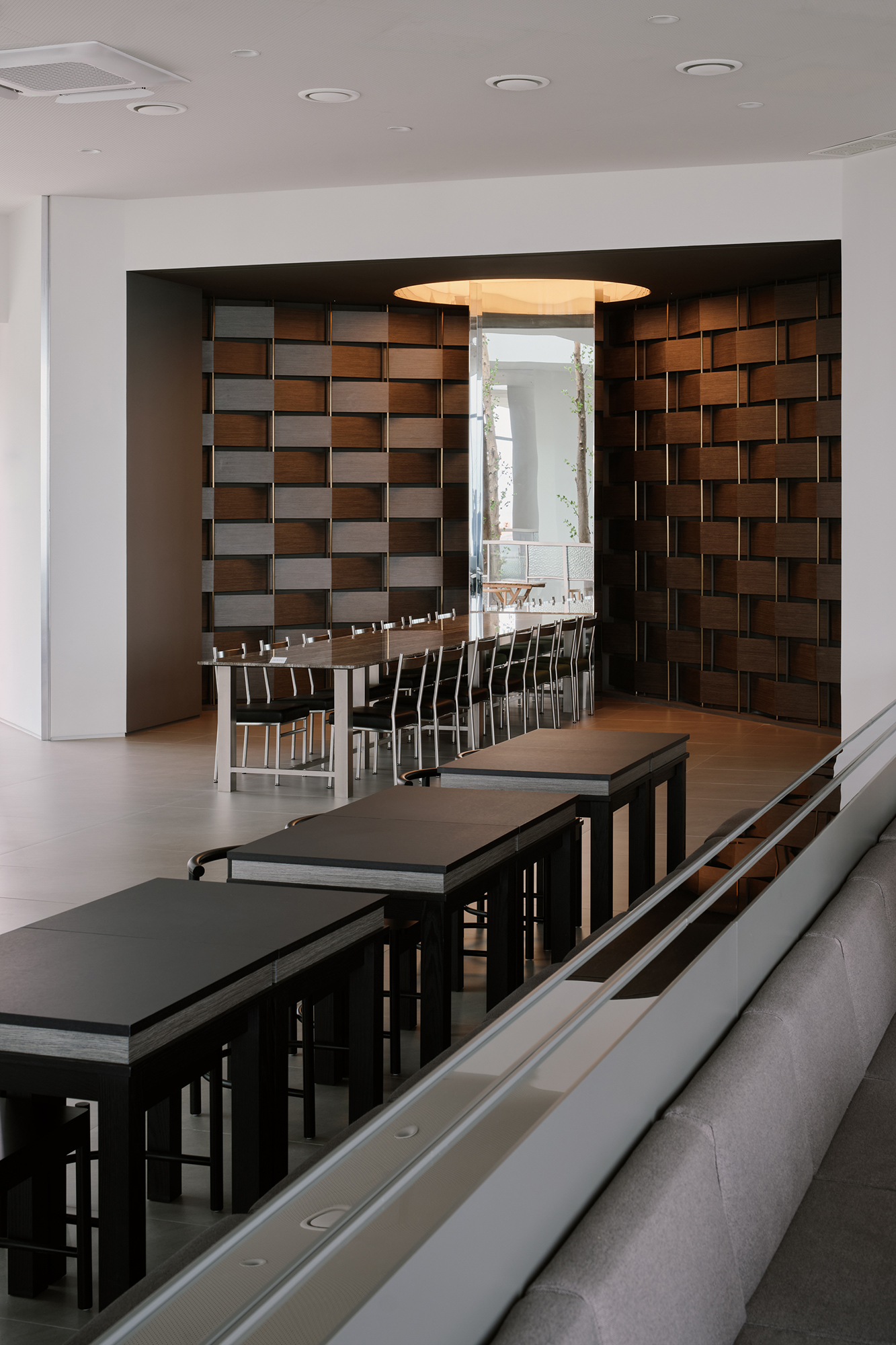
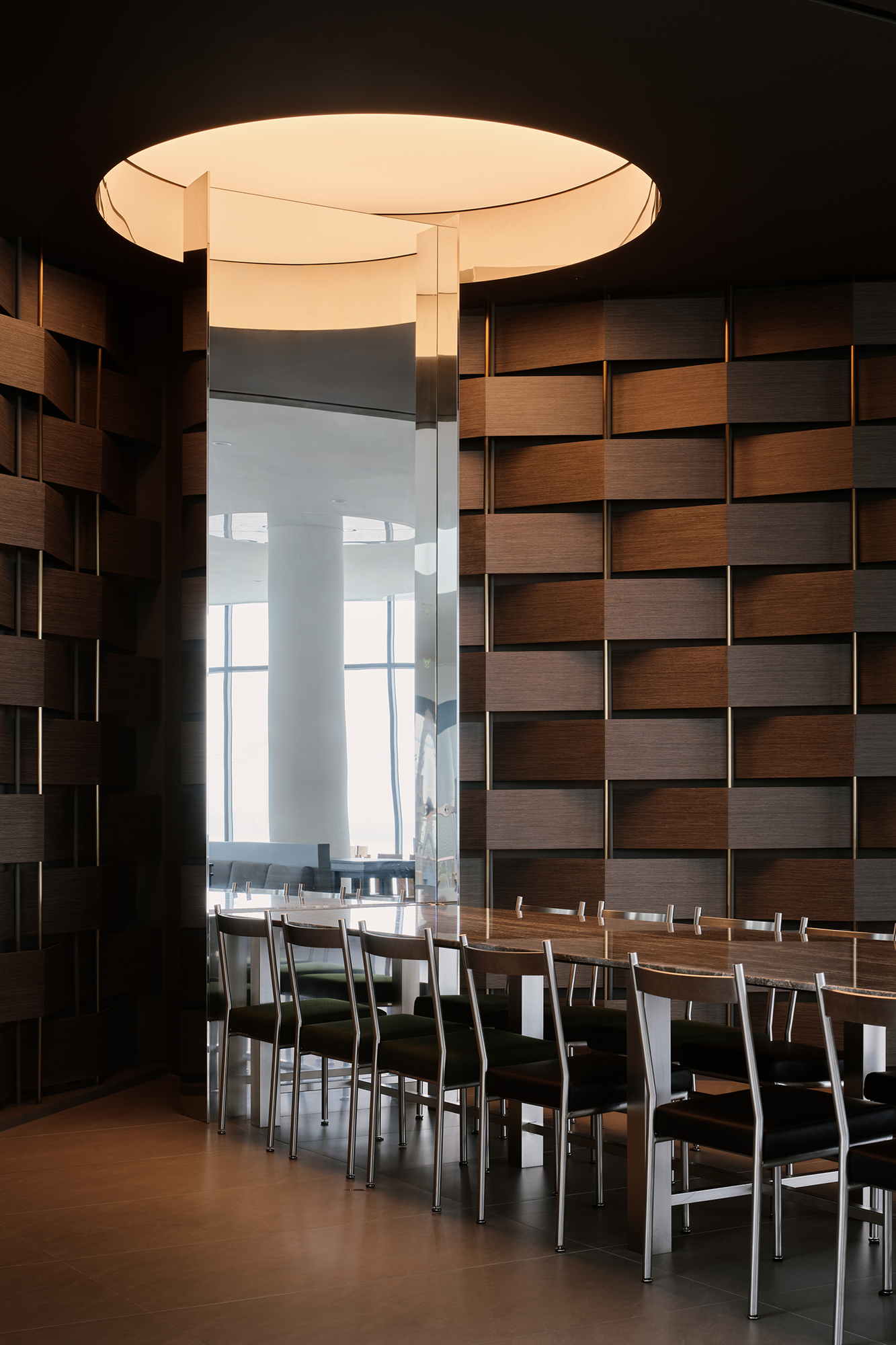
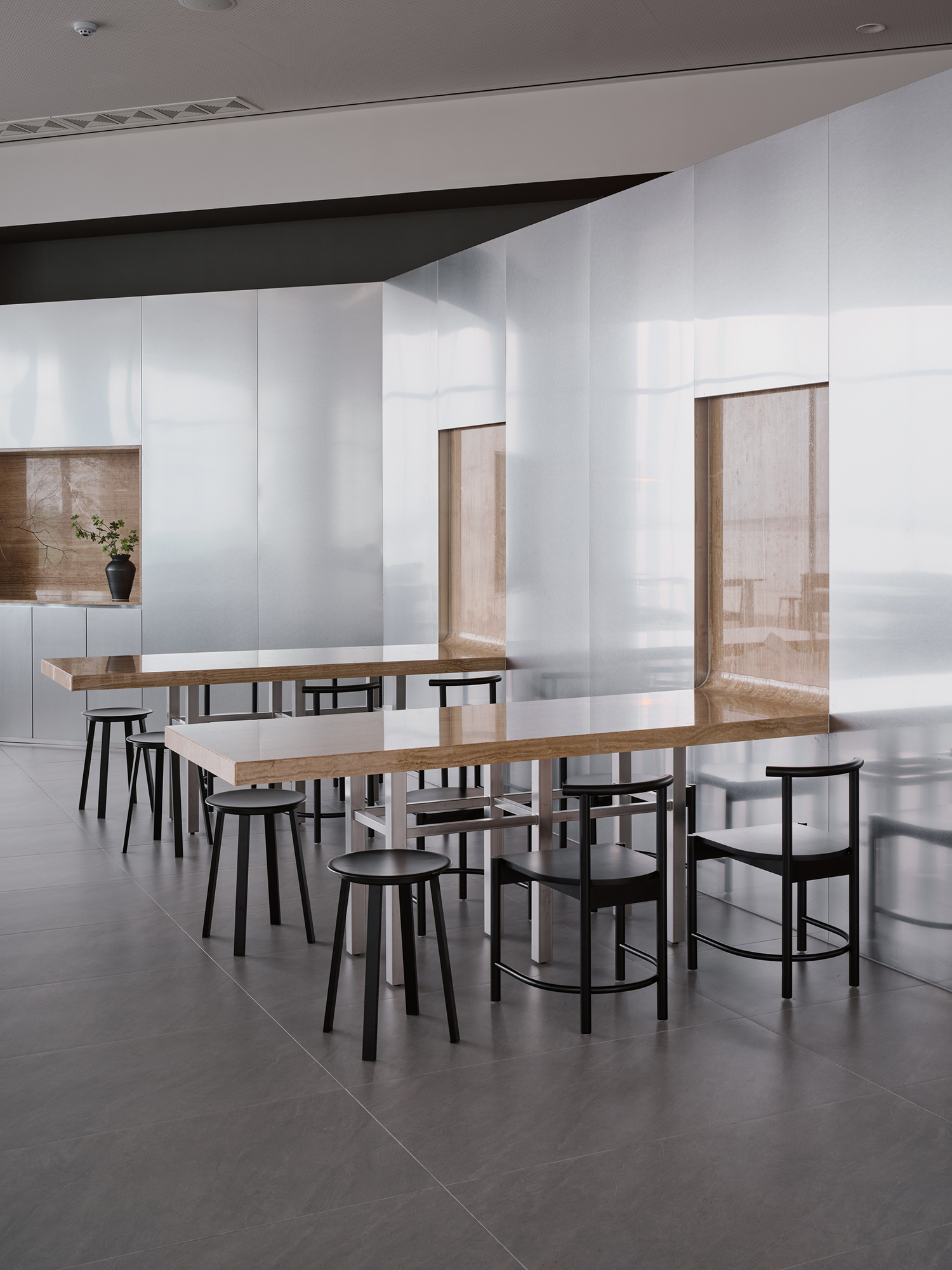
언캐니라는 이름의 출발점인 블라디미르의 ‘창백한 불꽃(Pale Fire)’이, 이야기의 전개를 뒤틀기 전까지는 철저하게 형식을 따르듯, 이 공간 역시 커피를 마시고, 대화에 집중하고, 바다를 바라보는 공간의 기본적인 기능은 온전히 유지하면서도, 그 안에 낯선 감각이 스며들도록 설계했다. 사용자는 익숙한 동선과 구성 안에서 예상치 못한 장면이나 어긋난 축을 마주하며, 익숙하지만 조금은 다른 방식으로 공간을 경험하게 된다.
Just as Pale Fire by Vladimir Nabokov follows strict form before quietly breaking it apart, this space keeps the familiar routines of drinking coffee, having conversations, and looking out at the sea. But within those rituals, it allows unfamiliar moments to emerge. Visitors follow a layout that feels familiar—yet along the way, encounter unexpected angles and slight disruptions. It’s a space that feels known, but just off enough to notice.