
삶의 첫 번째 공간인 집과 가정, 삶의 두 번째 공간인 일터에 이어 목적 없이 다양한 사람들이 어울릴 수 있는 삶의 세 번째 공간, 즉 비공식적인 공공생활이 일어나기 위해 필요한 공간이 제3의 공간이 된다. - Ray Oldenburg. [ The great good place ]
The third place is a space necessary for informal public life, where people from various backgrounds can come together without a specific purpose, in addition to the first place of life, which is home and family, and the second place, which is the workplace. - Ray Oldenburg, [The Great Good Place.]
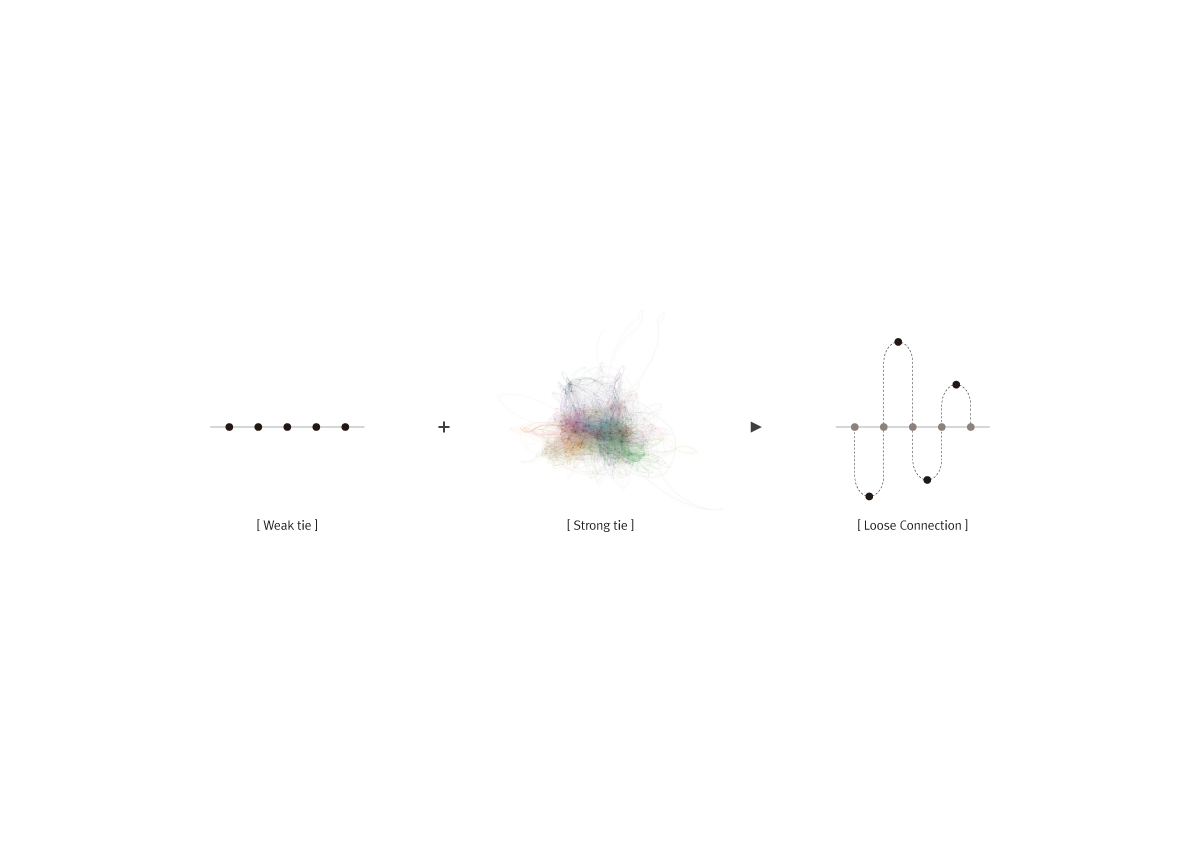


사람이 사람을 만나 교감을 나누고 물리적 친밀감을 형성하는 행위는 그 무엇으로도 대체하기 어렵다. 네트워크는 사회적 관계의 묶음으로, 우리는 ‘강한 연결(Strong ties)’ 과 ‘약한 연결(Weak ties)’이라는 실타래 속에서 저마다의 크고 작은 관계망을 만들어 나아간다. 제3의 공간은 복잡한 네트워크 속 일터와 삶터의 균형을 잡아주는 축으로, 우리에겐 자연스럽게 소요할 수 있는 공간, 즉 느슨한 커뮤니티를 형성할 수 있는 공간이 필요하다.
The act of meeting others, sharing emotional connections, and forming physical closeness is something that cannot easily be replaced. Networks are bundles of social relationships, and within the web of 'strong ties' and 'weak ties,' each of us creates our own unique networks, both large and small. The third place serves as an axis that balances the complexities of work and home life within these networks. We need spaces where we can naturally spend time—places that foster the creation of loose communities.

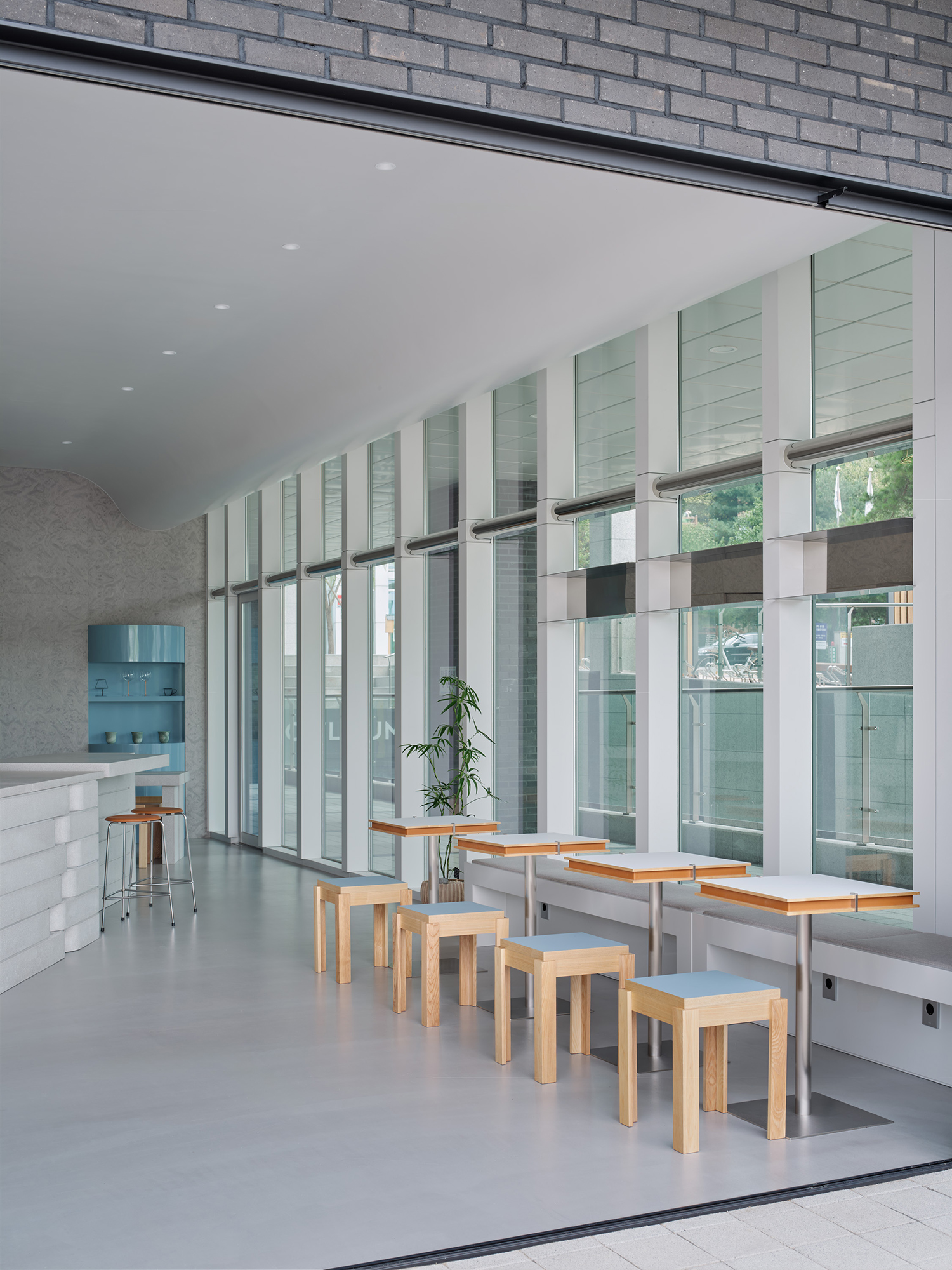
카페 RTV(르떼베)의 기획과 디자인을 맡은 스토프(stof)는 교류의 문턱을 낮추며 모든 이용자가 심리적, 행위적으로 중립을 지킬 수 있는 공간의 본질에 집중하고자 했다. 건축물과 동일한 벽돌을 파사드에 사용하고 안과 밖을 구분 짓는 건축 창호에 조형을 덧대어 공간의 경계를 허문 것은, 카페가 자리 잡은 곳에서 이질적이지 않은 ‘제3의 공간’의 모습을 갖추기 위함이었다.
Stof, responsible for the planning and design of Cafe RTV, aimed to lower the threshold for interaction and focus on creating a space where all users could maintain psychological and behavioral neutrality. By using the same bricks as the building's façade and adding sculptural elements to the architectural windows that separate inside from outside, they blurred the boundaries of the space. This was done to create a 'third place' that feels harmonious and natural in its surroundings.
스토프는 기업의 사내 카페라는 특성상 존재하는 ‘강한 연결(Strong ties)’과 ‘약한 연결(Weak ties)’의 사이, 중간 지점인 ‘느슨한 연결(Loose connection)’을 시각화하고자 했다. 특히 관계의 형성 지점에 구부리고 중첩되는 조형 언어를 더하며 교류의 접점을 표현했다.
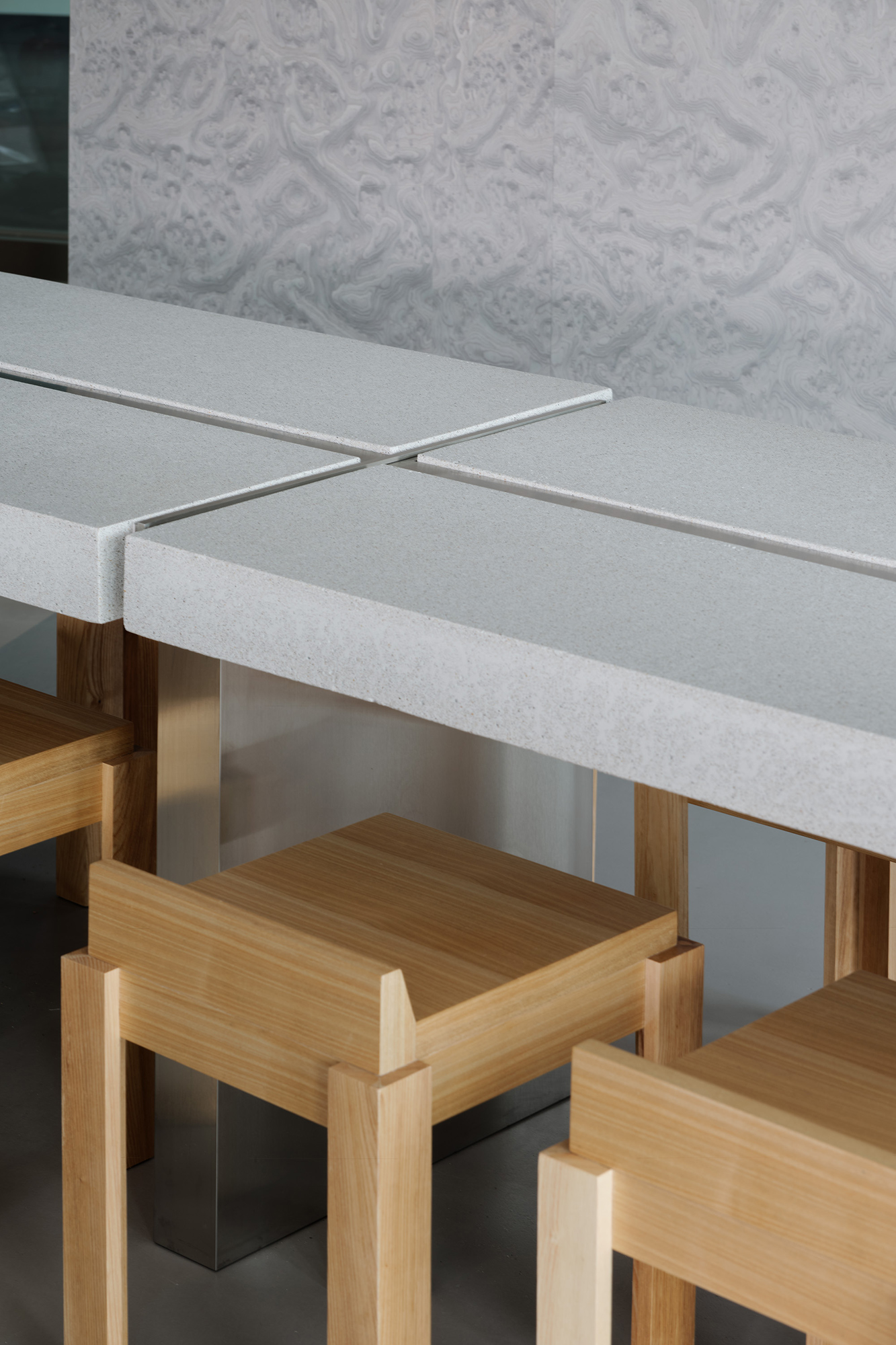
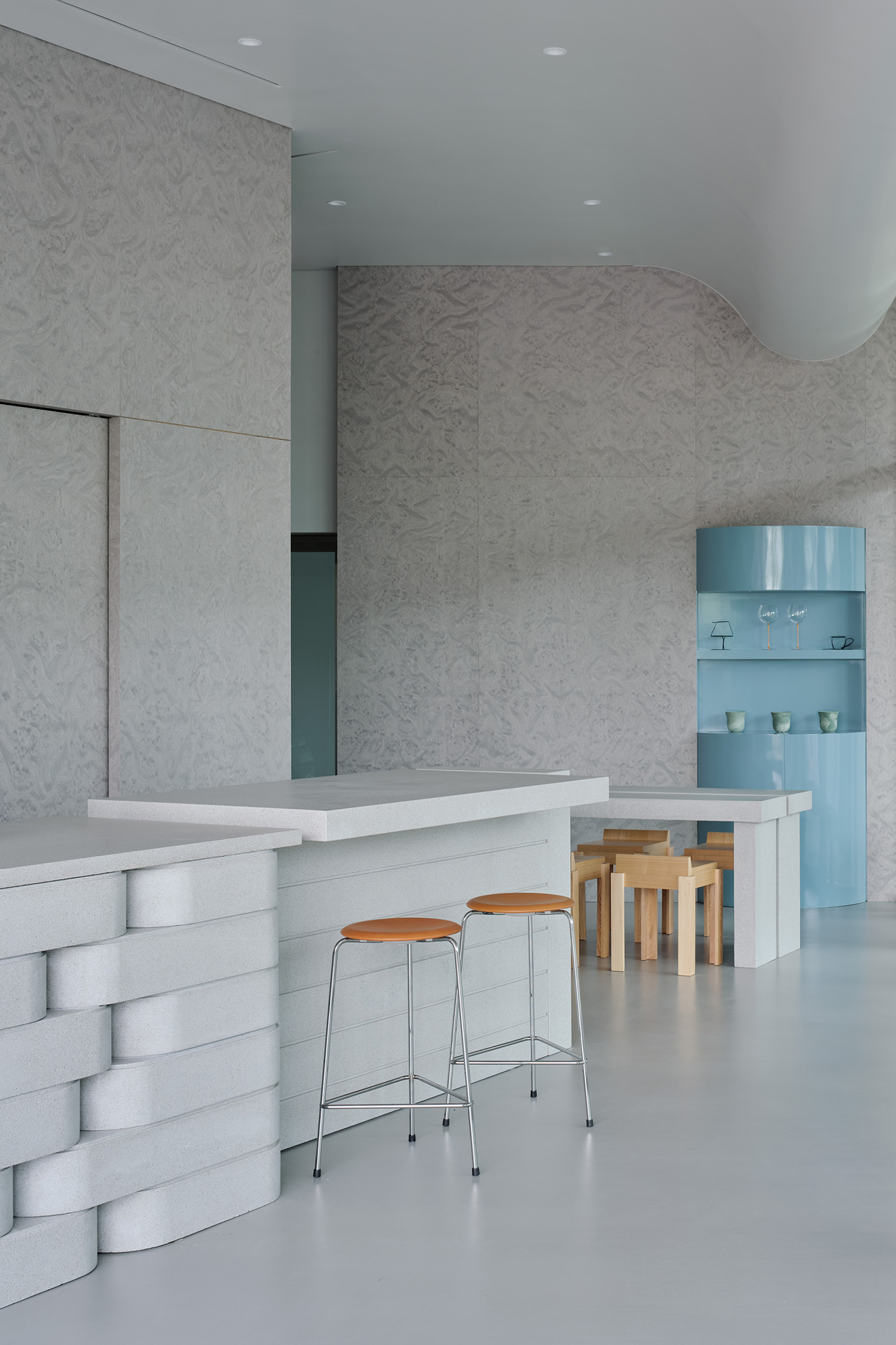
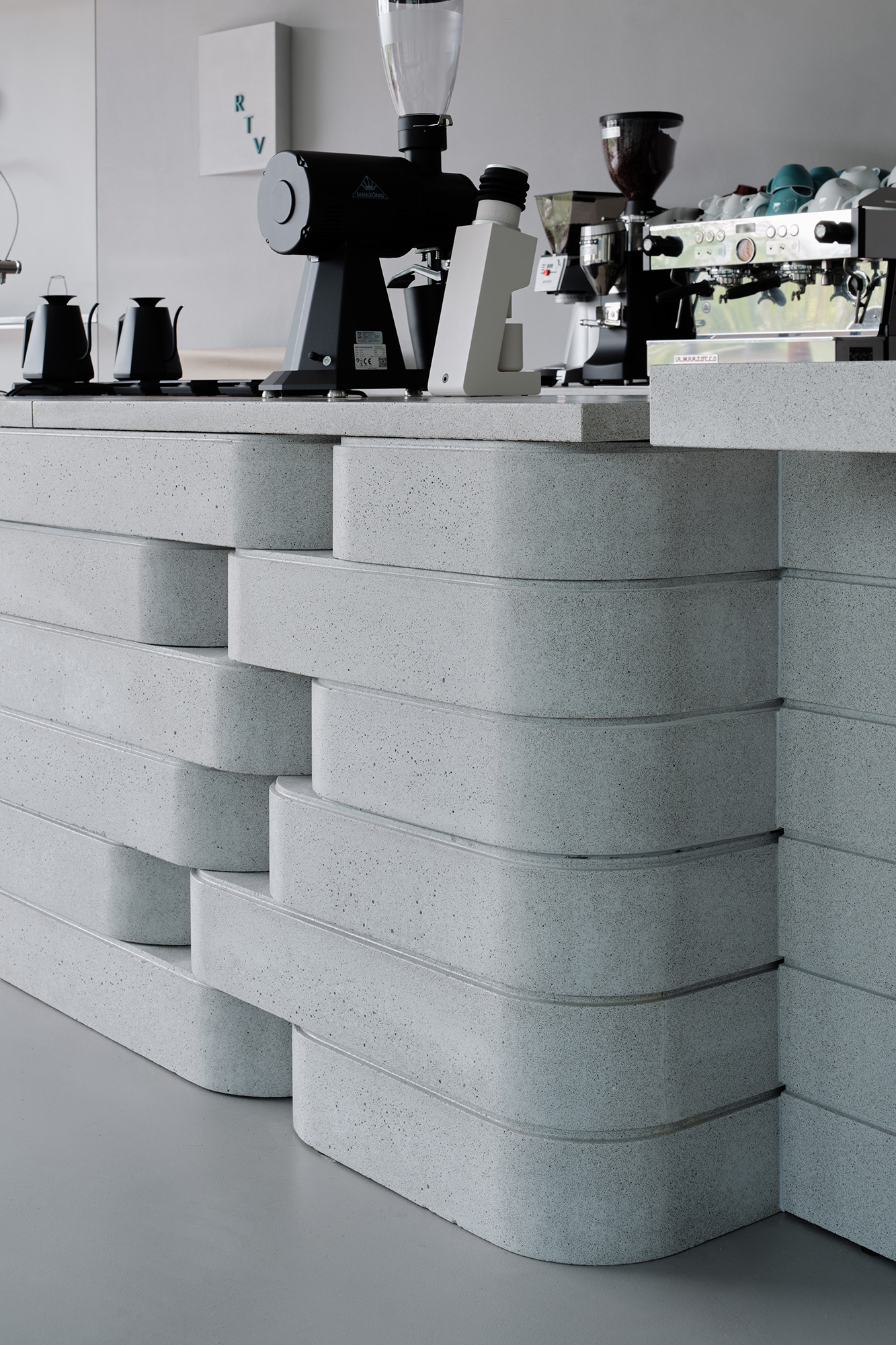
커피바는 UHPC 콘크리트가 교차되는 세 개의 매스(카운터-작업대-바 테이블)로 구현했는데, 이는 매스 간 매듭의 형태를 강조하며 기능의 연결을 보여준다. 커피바는 시각적 효과뿐 아니라 레이아웃에도 영향을 미친다. 벽체와 함께 30도 기울어진 사선이 만들어 낸 자연스러운 경계는 좌석 간 공간 분리를 만들며 고객 간의 느슨한 연결을 돕는다.
Stof aimed to visualize the concept of 'loose connections,' which lie between 'strong ties' and 'weak ties,' given the nature of the space as a corporate in-house cafe. They expressed points of interaction by incorporating sculptural elements that bend and overlap at the places where relationships are formed, highlighting these moments of connection.
The coffee bar is composed of three intersecting masses (counter, workstation, and bar table) made from UHPC concrete, emphasizing the knot-like form between the masses to symbolize the connection of functions. The coffee bar not only creates a visual impact but also influences the layout. The 30-degree diagonal line, formed along with the wall, creates natural boundaries that separate seating areas without physical barriers, facilitating loose connections between customers.



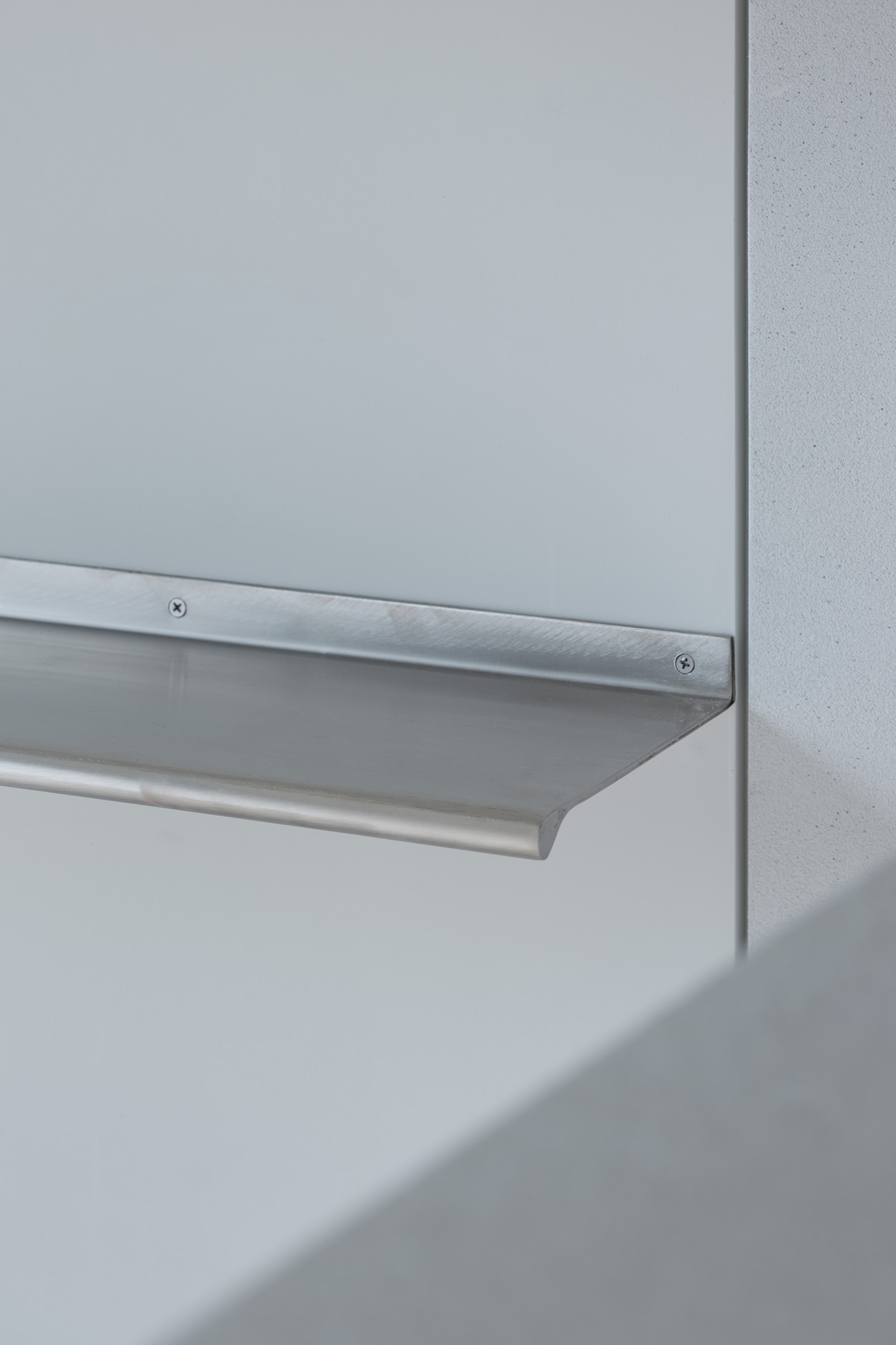

카페는 서로 질감이 다른 화이트 도장 마감과 천연 무늬목이 주를 이루고 있으며, 가구에는 따뜻한 목재 소재와 가죽을 사용해 시각적, 촉각적 균형을 맞추고 있다. 특히 좌석 쪽으로 떨어지는 천장의 곡선은 반 광의 소재를 사용해 유려한 흐름을 보여주며 공간에 운율을 가져온다. 가구는 기능을 가합하거나 하나의 가구 안에서 영역성을 만들어내는데, 그 형태를 묶어주는(tie) 조형을 통해 공간의 아이덴티티를 견고하게 다듬는다.
The cafe features a combination of white-painted finishes and natural wood veneers with contrasting textures. Warm wood and leather are used in the furniture, creating a balance both visually and tactilely. The curved ceiling that descends towards the seating area, made from semi-gloss materials, creates a smooth flow that brings rhythm to the space. The furniture either combines multiple functions or creates distinct zones within a single piece, with sculptural forms that tie elements together, further refining the identity of the space.