

서울의 중심지인 종로에 위치한 로스터리 카페 felt의 공간은 중간에 무게감 있는 검은색의 금속 덩어리가 곡선의 형태를 띠고 대비적으로 자리잡고 있다. studio stof 가 디자인한 이 공간은 톤과 소재, 조형을 통해 커피와 사람에 집중할 수 있도록 계획되었다.
Located in the heart of Jongno, Seoul, felt’s roastery café is defined by a sculptural black metal mass—curved, weighty, and boldly set at the center of the space. Designed by studio stof, the project uses tone, materiality, and form to draw focus toward the essentials: coffee and the people who gather around it.
서울 종로, 도시의 축을 따라 이어지는 역사적 맥락 속에 자리한 로스터리 카페 felt 광화문점은 커피 향이 도시의 리듬과 맞닿는 장소다. 수많은 흐름이 교차하는 중심부에 놓인 이 공간은, 단순한 카페가 아니라 현대적 감각으로 재해석된 ‘도시의 쉼터’를 지향한다.
Situated along the historical axis of central Seoul, Felt Gwanghwamun is a roastery café where the aroma of coffee intersects with the rhythms of the city. Positioned at the convergence of countless urban flows, the space aims to be more than a café—serving instead as a contemporary retreat embedded within the heart of the metropolis.
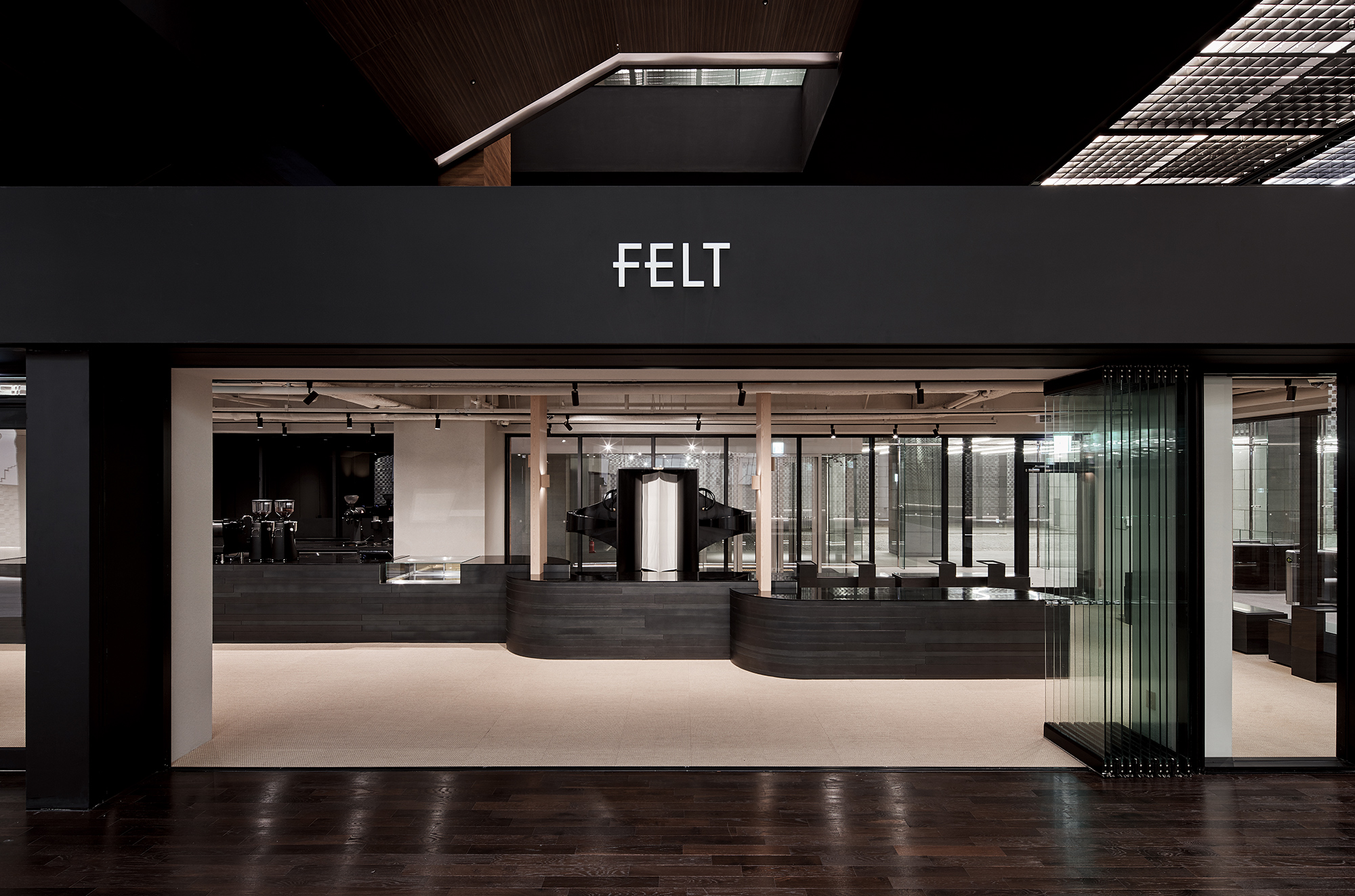
공간의 중심에는 묵직한 금속 덩어리가 부드러운 곡선으로 휘돌며 놓여있다. 강한 재료와 유연한 형상의 대비 속에서, 도시적 긴장감과 인간적인 온기가 공존한다. 한국의 로스터리 브랜드 felt는 매년 산지를 직접 방문해 고급 원두를 선별하고, 이를 세밀한 로스팅을 통해 완성도 높은 커피로 선보이는 브랜드로 알려져 있다. 본래 주택가 골목에서 시작된 작은 카페였으나, 서울의 중심인 D타워 로비층으로 자리를 옮기며 115㎡ 규모의 카페이자 쇼룸으로 확장되었다. 브랜드가 성장한 만큼 공간 또한 ‘확장된 정체성’을 담아야 했다. 이는 단순히 매장의 크기를 키우는 것이 아니라, felt라는 이름이 지닌 감각적 깊이와 도시적 존재감을 물리적 공간 안에 구현하는 과정이었다.
At its center, a substantial black metal mass unfolds into soft curves. Within the contrast of a rigid material and an organic form, urban tension and human warmth coexist.
Felt is a Korean roastery brand recognized for sourcing premium green beans through annual visits to coffee origins and refining their quality through precise roasting. Originating as a small neighborhood café, Felt has expanded into a 115㎡ café and showroom on the lobby floor of D Tower, reflecting the brand’s growing presence. The spatial narrative therefore required an expression of expanded identity—not simply a larger shop, but a physical embodiment of the brand’s sensory depth and urban character.

이 부지는 빌딩 로비의 한가운데, 사방으로 열린 중정 형태의 공간이었다. 일반적인 카페의 단방향적 동선과 달리, 이곳은 모든 방향에서 접근 가능한 구조였다. 따라서 stof은 방향성을 지우는 조형, 즉 어디서 바라보아도 평등한 인상을 주는 형태를 구상했다.
The site is located at the core of a building lobby, configured as an open courtyard space accessible from all directions. To respond to this multi-directional context, stof conceived a form without front or back, offering a uniform impression from any point of view.
중앙의 금속 구조물은 하나의 벽이자 테이블이자 좌석으로 기능하며, 그 곡선의 흐름이 사람들의 동선을 자연스럽게 이끈다. 이는 전통적인 카페 구획을 허물고, 로비 전체를 하나의 ‘광장(Plaza)’으로 확장시키는 장치로 작동한다. 직선적인 건축 구조 안에서 곡선이 만들어내는 유동적인 리듬은, 도시 속에서 잠시 멈춰 숨을 고르는 듯한 평온을 제공한다. 금속은 묵직하고 차가운 재료이지만, 표면의 미세한 반사와 주변 조명, 사람의 움직임이 더해지며 유연하게 변화한다. 이 곡면 구조는 높이의 변화를 통해 각각 커피메이킹, 디스플레이, 벤치좌석 등으로 기능이 구분되며, 기능과 조형이 하나로 결합된 풍경을 형성한다.
The central metal structure becomes a wall, a table, and a bench simultaneously, guiding movement through its flowing geometry. It dissolves the conventional boundaries of a café and operates as a device that extends the space into the broader lobby—a transition from a defined shop to a public plaza.
Within the linear architecture, the fluid curves create a dynamic rhythm, offering a brief moment of stillness within the city. Although metal is inherently cold and heavy, its subtle reflections respond to light and human movement, appearing soft and adaptive. The height variations within the curved structure differentiate functions such as coffee making, display, and seating, producing a unified landscape of program and form.
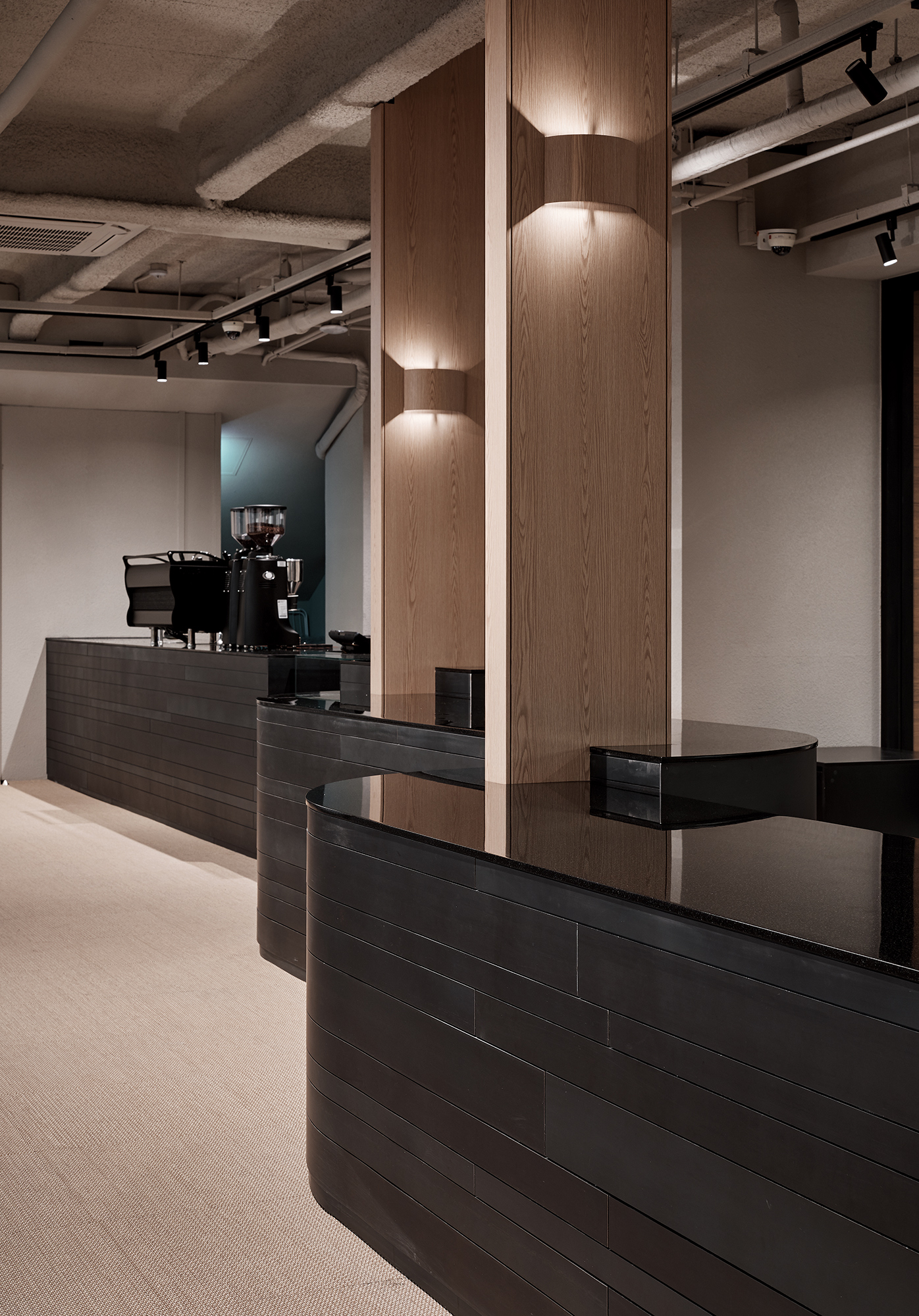
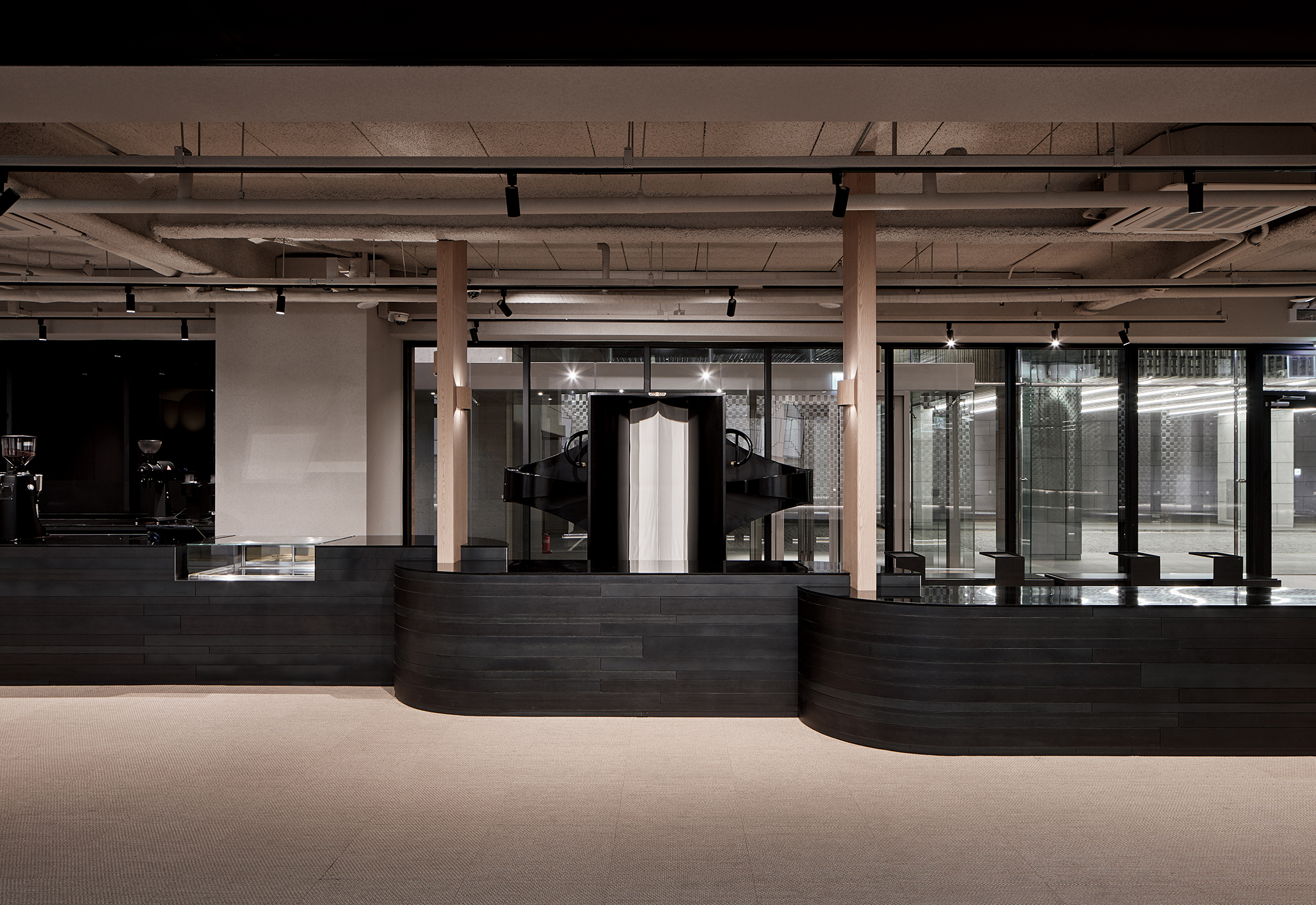

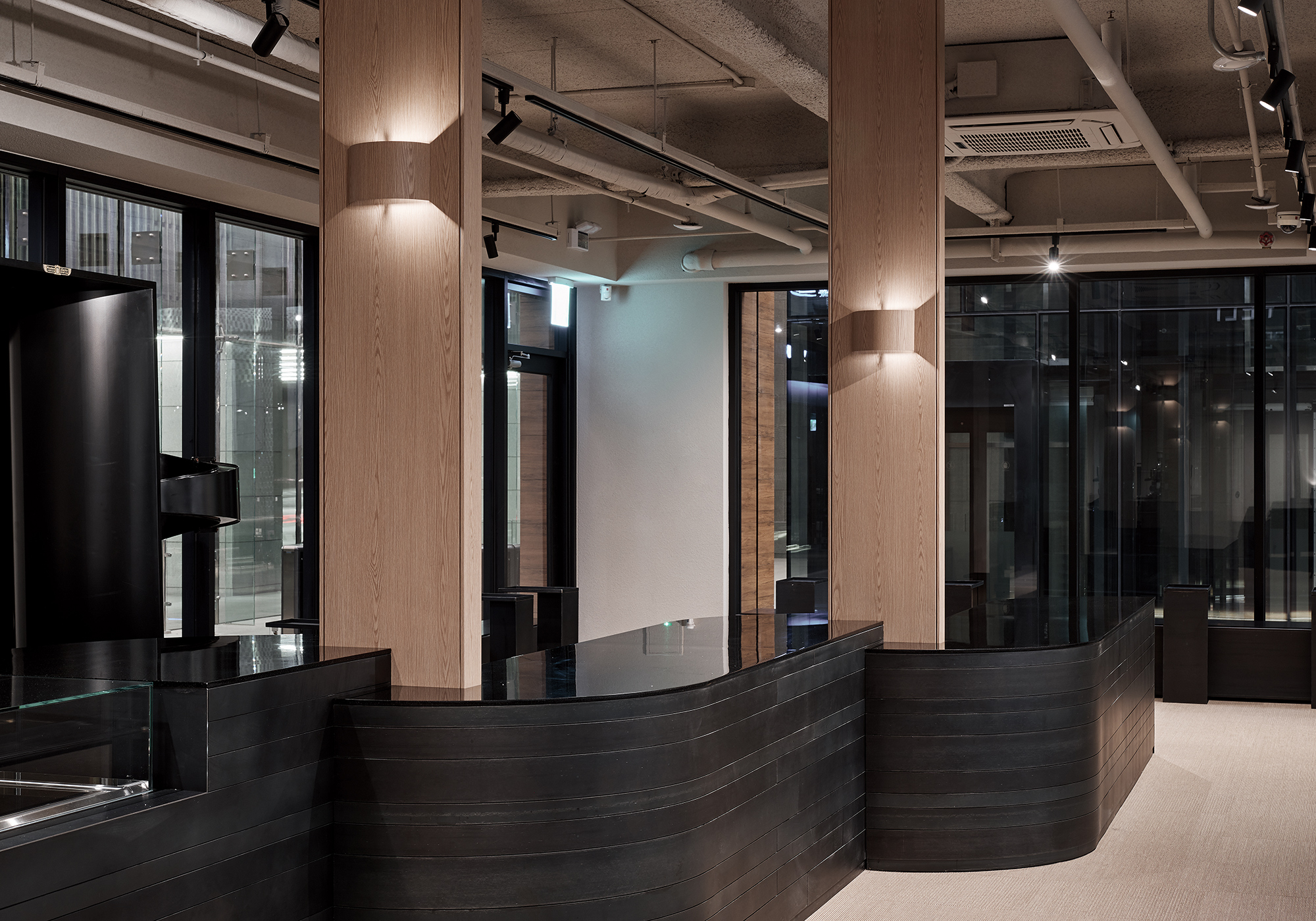

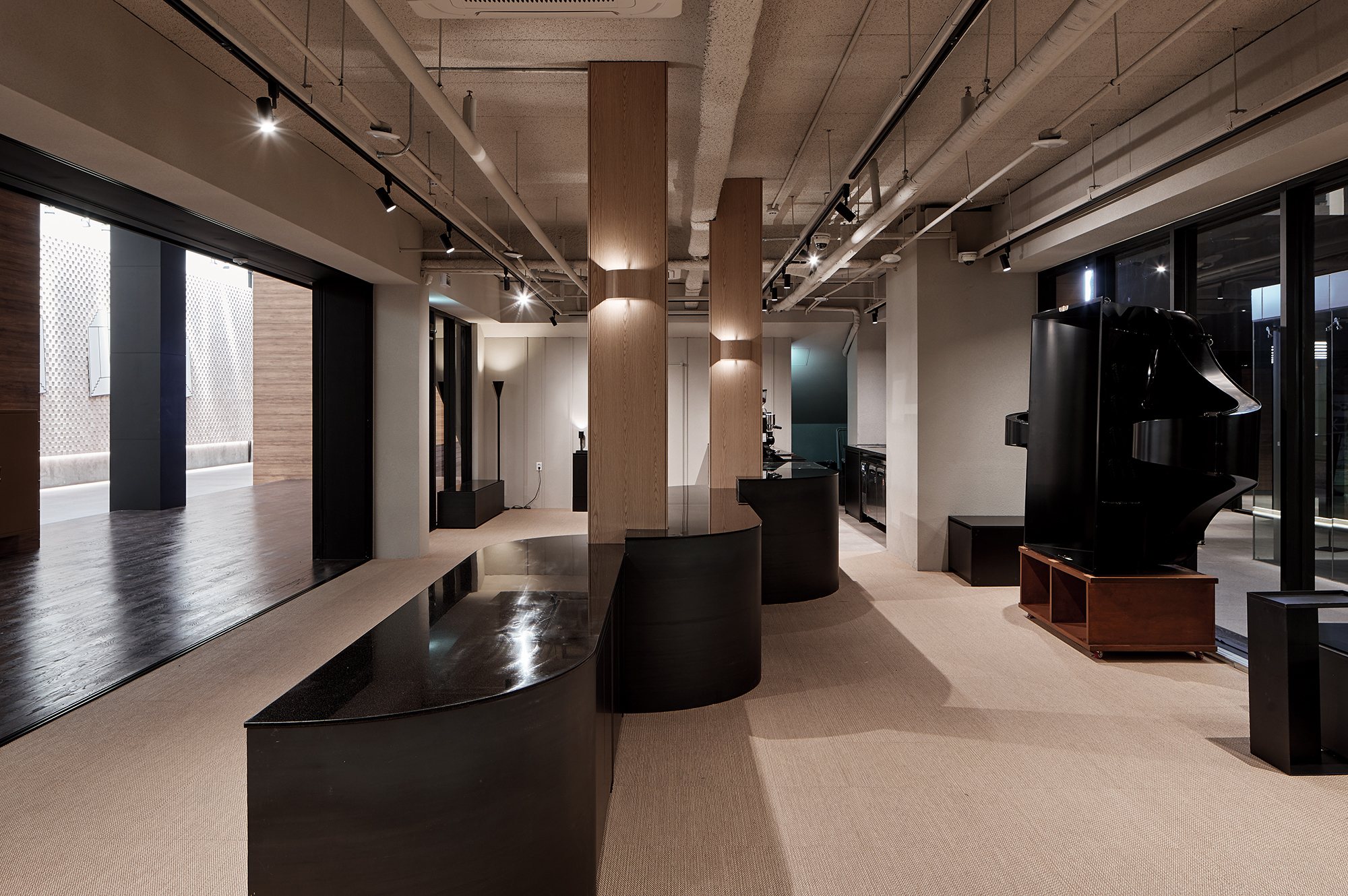


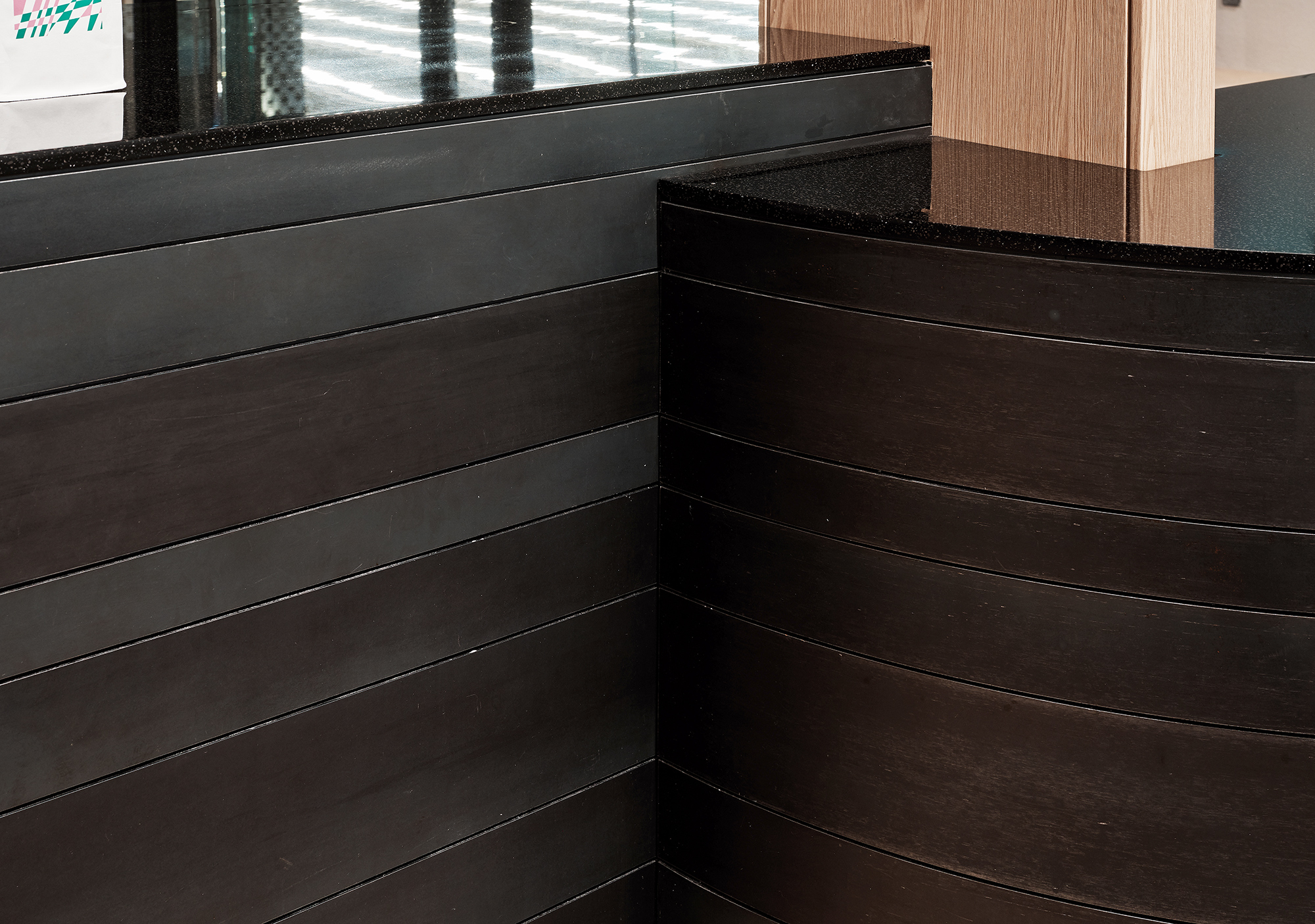
또한 외부 마루에서 착안한 패턴의 바리스타 테이블과 우드톤의 기둥은 주변 환경과의 시각적 이질감을 줄이고, 로비의 열린 분위기를 실내로 유입시킨다. 이로써 카페는 건축물의 일부로서 존재하면서도 독립적인 장면으로 인식된다. 재료와 형태, 빛의 조율을 통해 ‘커피를 매개로 한 도시적 경험’이 완성된 것이다.
stof는 기획 단계에서부터 글이 아닌 이미지로서 동선과 행위를 유도하고자 하였으며, 다양한 방향에서 평등한 이미지를 갖는 공간을 통해, 이곳은 115㎡의 카페가 아닌 650㎡의 광장이 될 수 있었다.
felt 광화문점은 카페의 범위를 넘어, 도시 안에서의 새로운 관계 맺기 방식을 제안한다. 공간은 머무름과 이동, 집중과 교류가 교차하는 장으로 작동하며, 이는 stof이 일관되게 추구해온 ‘이야기를 품은 공간’의 철학이자, 도시 속 인간의 감각을 회복시키는 하나의 장치로 남는다.
Barista stations inspired by exterior flooring patterns and wood-toned columns reduce visual discord with the surrounding lobby, allowing a natural flow between inside and outside. The café becomes both an extension of the architecture and an independent scene of activity—completing a distinctly urban coffee experience shaped through materiality and light.
“From the planning stage, we aimed to guide flow and behavior through imagery rather than signage. Providing an equal impression from every direction allowed this café to become a 650㎡ plaza, not merely a 115㎡ interior.”
Felt Gwanghwamun proposes a new mode of interaction within the city—one that blurs boundaries between pausing and passing, focus and exchange. The space continues stof’s commitment to creating narrative-driven environments, acting as a device that restores human sensibility within the urban fabric.
