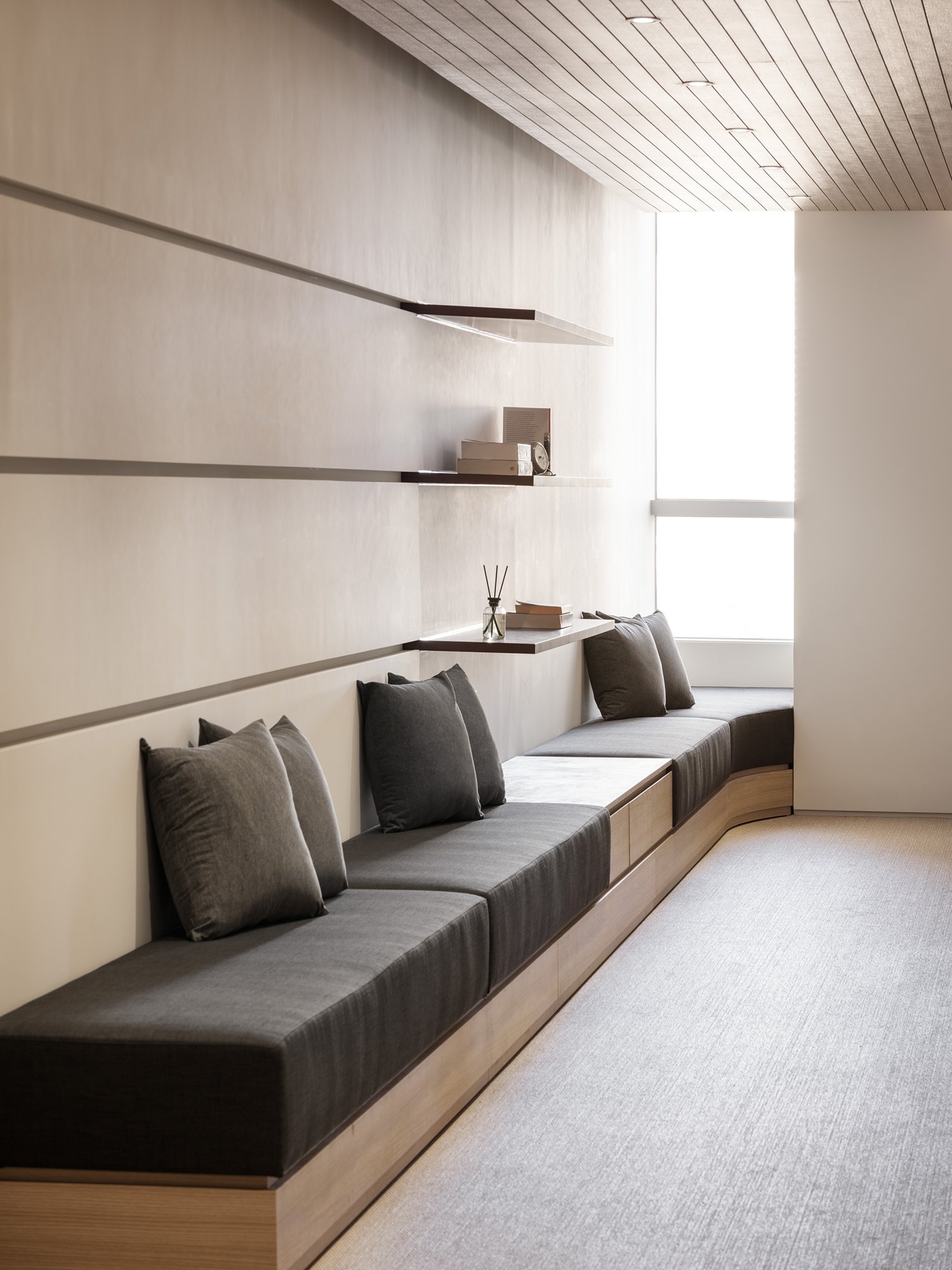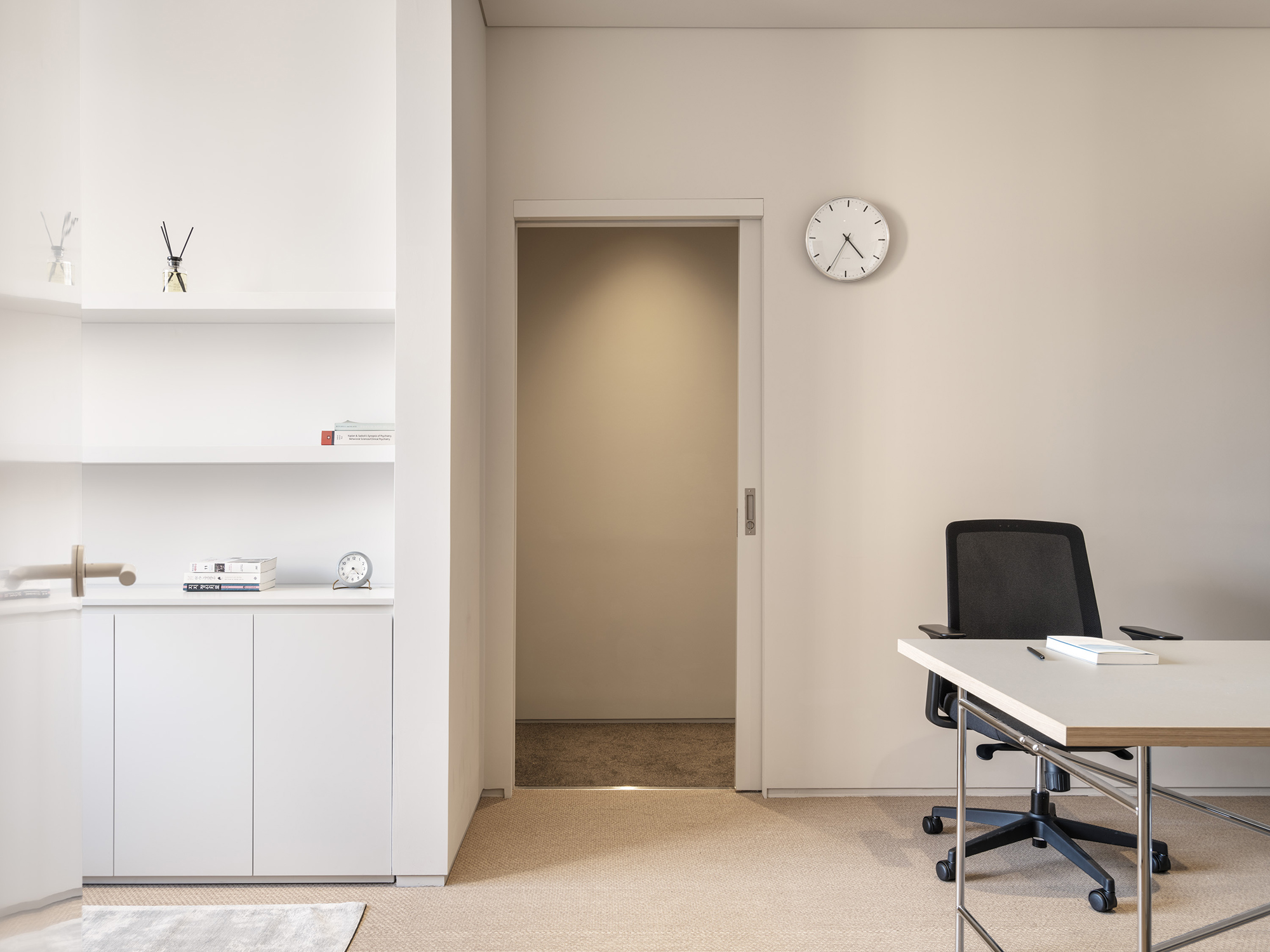

해운대 정신건강의학과는 ‘치유의 여정’을 담은 새로운 클리닉 공간을 선보인다. 이번 프로젝트는 단순히 진료가 이루어지는 기능적 장소를 넘어, 환자가 능동적으로 스스로를 치유하는 주체가 될 수 있도록 설계되었다.
Centum Forest Clinic introduces a new clinic space that embodies a “journey of healing.” This project goes beyond a mere functional space for treatment, creating an environment where patients can actively become agents of their own healing.


해운대 정신건강의학과는 단순한 기능적 진료 공간의 범위를 넘어선다. 일반적인 진료실이 제공하는 일차적 치료 기능을 넘어, 환자와 의사 모두가 안전함을 느끼고 마음의 안정을 회복할 수 있는 ‘장소’로서 자리한다. 마치 종교 건축이 신앙과 믿음을 담아내고, 공간을 통해 정신적 위안을 주듯, 이 클리닉은 물리적 구조뿐 아니라 심리적 경험까지 고려한 공간을 지향하고 있다.
여기서는 단순히 질병을 진단하고 약을 처방하는 것 이상의 경험이 이루어진다. 환자는 치유의 과정을 몸과 마음으로 느끼고, 의사와의 관계 속에서 신뢰와 안정을 쌓으며 회복을 경험하게 된다. 즉, 이곳은 진료실이라는 틀 안에서 이루어지는 치료를 넘어, 관계와 치유, 회복이 유기적으로 연결된 ‘치유형 공간’이라 할 수 있다.
This space is more than just a functional treatment facility. Beyond the basic medical role of diagnosis and prescription, it is designed as a place where both patients and doctors can feel safe and regain peace of mind. Just as religious architecture embodies faith and provides spiritual comfort, this clinic integrates not only physical structures but also psychological experiences into its design.
Here, treatment transcends the conventional boundaries of diagnosis and medication. Patients experience healing both physically and emotionally, building trust and security through relationships with their doctors. In this way, the clinic evolves beyond the framework of a consultation room into a healing-oriented space, where relationships, recovery, and growth are organically intertwined.

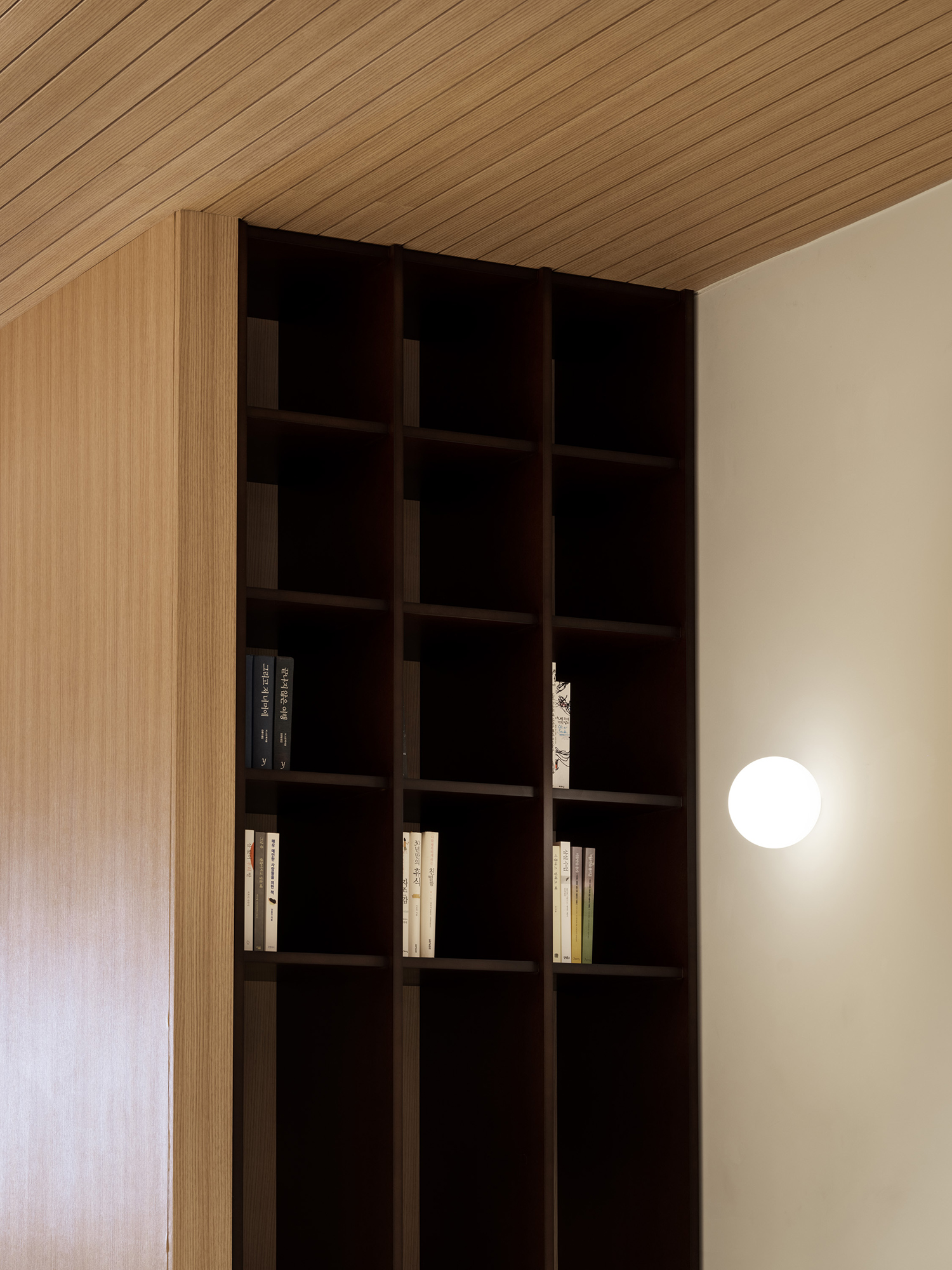


공간의 핵심은 ‘순환(Circulation)’이다. 외부에서 내부로 이어지는 유기적인 동선은 환자가 스스로의 마음을 열고, 내면 깊숙이 들어가는 과정을 은유한다. 이는 곧 치료의 여정을 공간적 경험으로 풀어낸 것이다. 대기실, 접수실, 진료실로 이어지는 일련의 과정은 권위적이지 않은 중립적 조형과 마감으로 구성되었다. 풍경과 채광을 공유하는 가구 배치는 의사와 환자가 협력적 관계 속에서 대화를 이어가도록 돕는다. 좁은 복도를 따라 걸으며 불필요한 시선이나 접촉은 최소화되고, 온전히 자기 자신과 마주할 수 있는 시간이 보장된다.
The core concept of the space is “circulation.” The organic flow from exterior to interior symbolizes the patient’s process of opening up and delving deeper into their inner self. This journey is expressed as a spatial experience. The sequence from waiting area to reception and consultation rooms is designed with neutral forms and finishes that avoid authority or hierarchy. Furniture arrangements that share views and natural light encourage collaborative conversations between doctor and patient. Narrow corridors minimize unnecessary gazes or encounters, ensuring time and space for patients to face themselves fully.

마감재 또한 중요한 메시지를 담고 있다. 표면에 ‘흠결’을 가졌지만 이로 인해 더 가치를 인정받는 소재인 마파벌(Mapa Burl)을 의도적으로 사용하여, 다름과 불완전함 속에서도 발견되는 고유한 아름다움을 보여준다. 이는 차별과 낙인이 아닌, 존중과 지지를 향한 공간의 태도를 상징한다.
The finishes also convey an important message. Materials with intentional “imperfections” are used to reveal the unique beauty found within difference and incompleteness. This reflects the clinic’s attitude of respect and support, rather than discrimination or stigma.