

해슬리 나인브릿지 아카이브 존은 건축·자연·사용자의 관계를 확장하는 감각적 기록 공간으로, 기존 건축의 맥락 속에서 클럽의 역사와 정체성을 공간 경험으로 전달하는 것을 목표로 한다.
The Hasley Nine Bridges Archive Zone is conceived as a sensory repository that extends the relationship between architecture, nature, and users, transforming the club’s history and identity into an immersive spatial experience while remaining deeply rooted in the original architectural context.

건축가 반 시게루가 설계한 해슬리 나인브릿지는 ‘차경(借景)’이라는 동아시아 전통 건축 개념을 현대적으로 재해석한 골프 클럽하우스이다. 건축과 풍경, 사용자의 경계를 흐리며 자연을 내부 공간 속으로 끌어들임으로써, 다다미와 마루 같은 구조적 요소를 단순한 역사적 인용이 아닌 인간과 자연, 인간과 인간의 관계를 구축하는 구성 장치로 활용한다. 티 패그, 대나무 베개, 꽃이 피어나는 유기적 형태 등 일상적 요소에서 영감을 얻어, 자연의 일부처럼 작동하는 구조를 구현하고자 했다. 이는 형태나 재료에만 국한된 철학이 아니라, 건축의 경험적·감각적 차원까지 확장되는 태도이다.
Designed by renowned architect Shigeru Ban, Hasley Nine Bridges is a golf clubhouse that reinterprets the traditional East Asian architectural concept of borrowed scenery (借景), dissolving the boundaries between architecture, landscape, and inhabitant. Through the integration of nature into interior space, the project articulates an architectural ethos wherein structural elements such as tatami and maru are not merely historical references but compositional tools to foster human-to-human and human-to-nature relationships. Drawing inspiration from vernacular elements such as tee pegs, bamboo pillows, and the organic unfolding of a blooming flower, Ban sought to create a structure that operates as part of nature itself. This philosophy is not limited to form or materiality but extends into the experiential and sensory dimensions of the architecture.
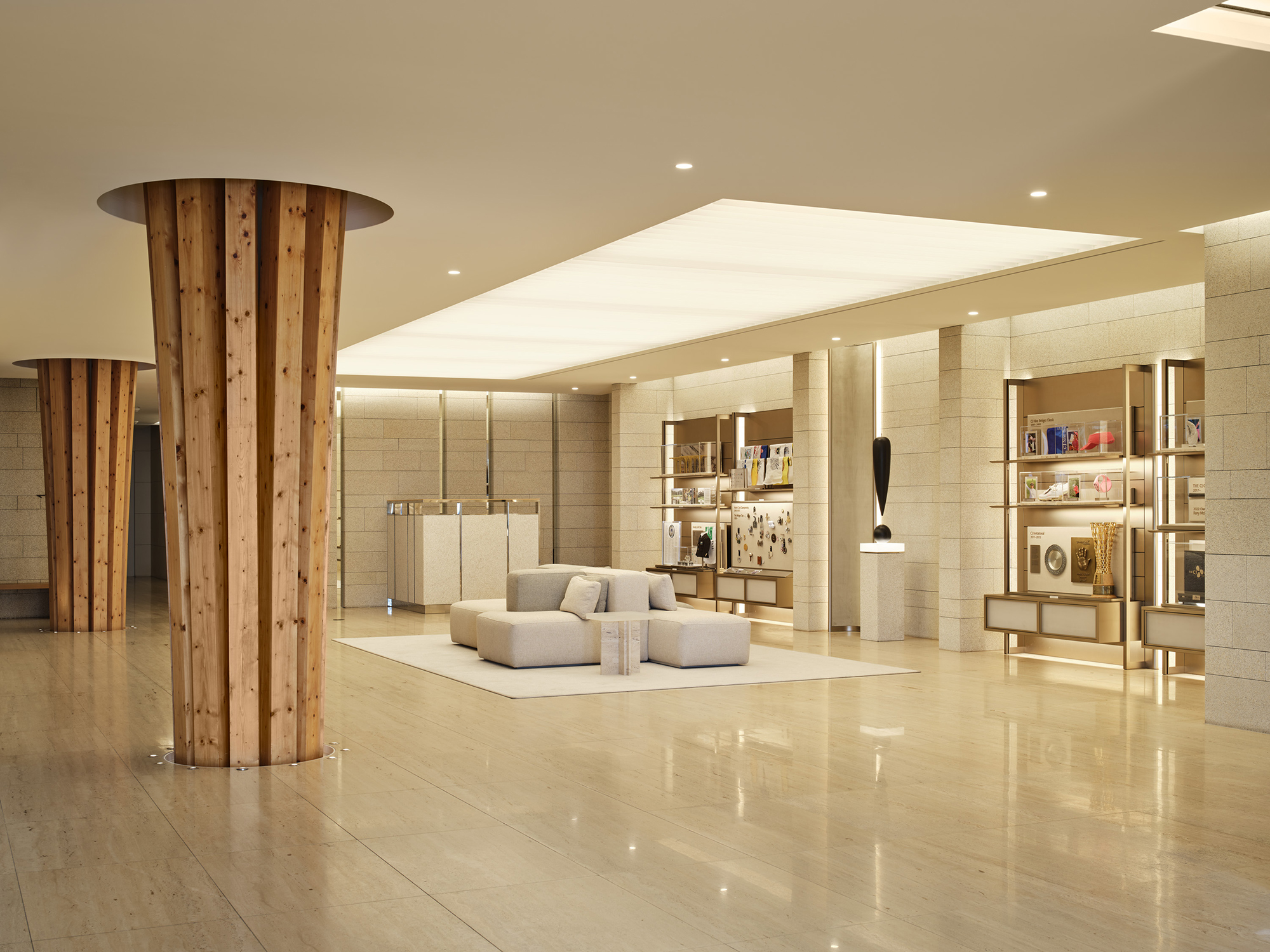
이 개념적 틀 안에서 아카이브 존(Archive Zone) 은 건축적 서사를 확장시키고, 자연·건축·사용자(멤버 및 플레이어) 간의 관계를 가시화하는 공간적 부속 장치로 등장한다. 단순히 기록물을 보관하는 수장고가 아니라, 해슬리의 정체성과 역사, 집단적 기억이 교차하는 감각적 저장소로서, 클럽 멤버들에게 소속감과 자긍심을 강화하는 것을 주요 목표로 한다.
Within this conceptual framework, the Archive Zone emerges as a spatial appendix—one that extends the architectural narrative while rendering the relationship between nature, architecture, and the users (members and players) visible. Far from a conventional storage room for historical records, the archive is envisioned as a sensory repository in which identity, history, and collective memory converge. Its primary aim is to reinforce a sense of belonging and pride among club members by spatializing the cultural and historical essence of Hasley.

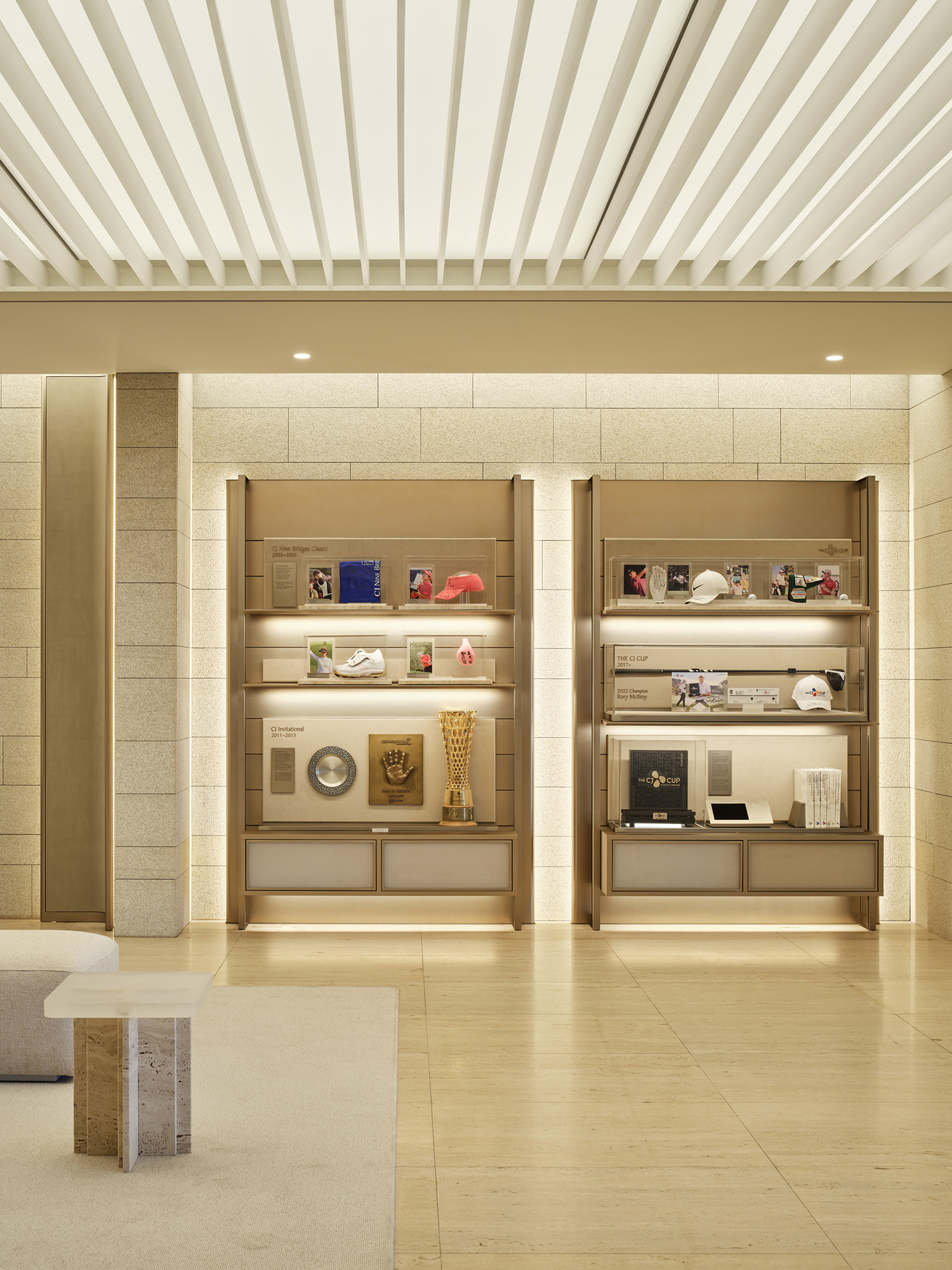


아카이브의 공간 구성은 두 가지 전략에 의해 정의된다.
a. 건축적 리듬 속 빛을 통한 영역의 전환
건축 전체에 흐르는 유선형적 구조 언어 가운데 아크릴 루버를 따라 부드럽게 내려오는 빛으로 전시의 영역을 인지할 수 있도록 하였다. 벽을 따라 레이어링 된 디스플레이 월은 전체를 관통하는 건축 논리를 해치지 않으며, 공간 속에 조화롭게 스며들도록 하였다.
The archive’s spatial composition is governed by two principal strategies
/
a. Translating Architectural Rhythm into Display Systems
The linear structural language that permeates the building is reinterpreted through contrast, by integrating curved shelving systems inspired by the soft rhythm of the building’s columnar forms. This approach expands the architectural logic into the exhibition system, maintaining the building’s inherent tension while allowing the display elements to become embedded as sculptural, yet harmonious, components of the space.


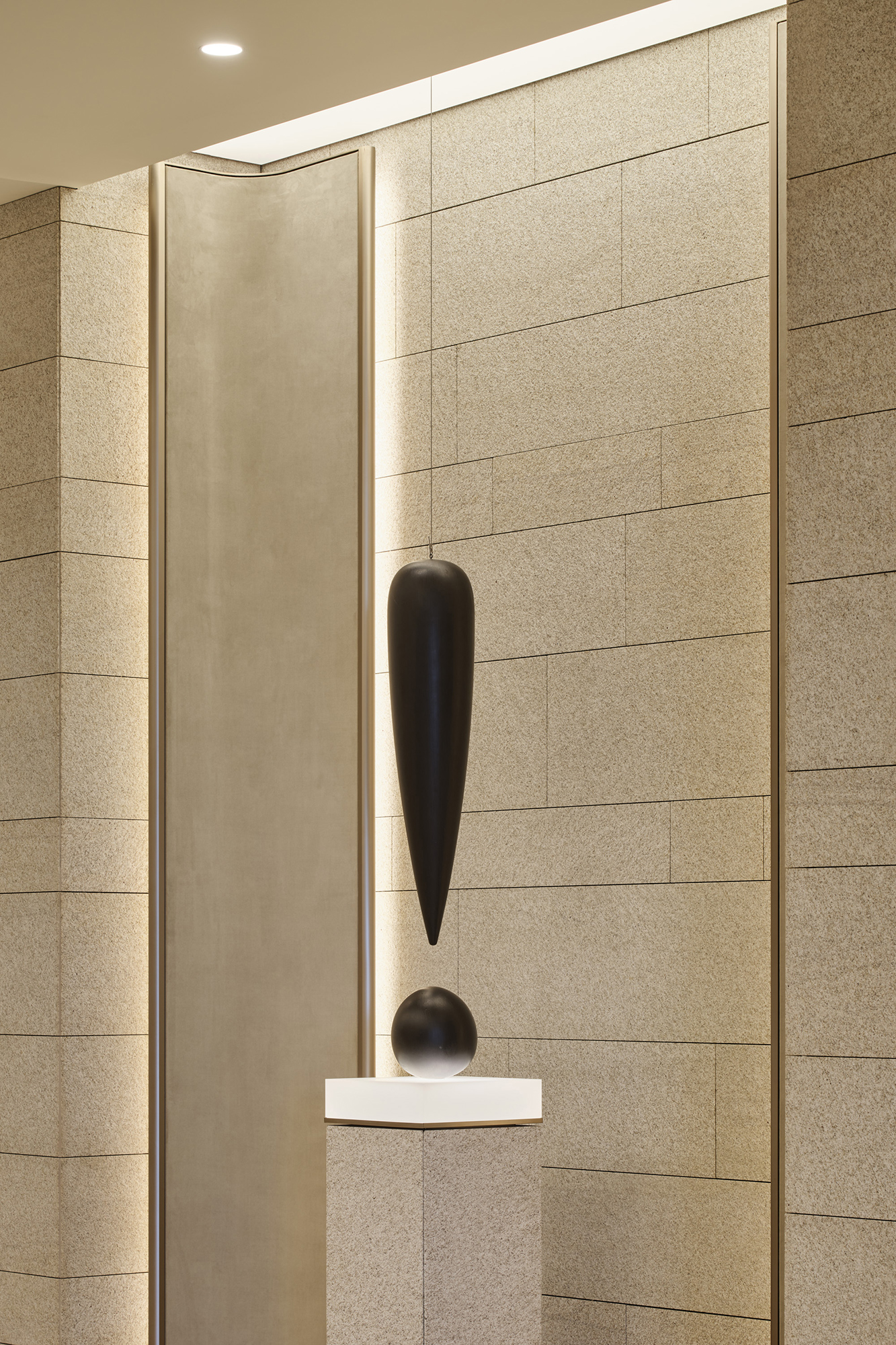
b. 기존 건축 언어와의 물질적 연속성
전시와 기존 건축 사이의 결속을 위해 기존 벽 마감은 유지하고, 석재와 목재, 금속을 절제된 방식으로 도입하였다. 이는 클럽하우스 전반에 사용된 재료성과 호응하며 시각적·공간적 단절을 피하고, 아카이브가 기존 건축의 흐름을 이어가는 유기적 확장으로 작동하도록 한다.
b. Material Continuity and Respect for the Original Fabric
To ensure cohesion between the exhibition and the host architecture, the design preserves the existing wall finishes while introducing stone and wood, metal in measured application. These materials echo those found throughout the clubhouse, thus avoiding visual or spatial disjunction. The result is an archive that does not feel like a separate intervention but rather an extension of the architectural organism itself.
원 건축이 지닌 근본 원칙을 존중하고 이를 새로운 프로그램 층위로 재해석함으로써, 해슬리 나인브릿지 아카이브는 단순한 장식적 연출을 넘어, 건물의 유산과 커뮤니티의 진화하는 정체성을 함께 담아내는 깊이 있는 공간 서사를 만들어낸다.
By adhering to the underlying principles of the original architecture and reinterpreting them within a new programmatic layer, the Hasley Nine Bridges Archive avoids superficial scenography in favor of a deeply embedded spatial narrative—one that honors both the legacy of the building and the evolving identity of its community.
